Friday, February 28, 2020

5 Largest Moons in the Solar System

5 largest moons in the solar system

A moon is a natural satellite rotating around a planet. While moons vary in size, each moon is much smaller than its planet. There are 176 known natural moons orbiting planets in our Solar System. 168 moons orbit the “full-size” planets (Mercury, Venus, Earth, Mars, Jupiter, Saturn, Uranus, and Neptune), while 8 moons orbit the smaller planets calling dwarf planets (Ceres, Pluto, Haumea, Makemake, and Eris). Several moons in our solar system are larger than the planet Pluto and two moons are larger than the planet Mercury. Many people think that the answer to ‘what is the largest moon in the Solar System’ is our Moon. It is not. Our Moon is the fifth largest Moon in the solar system. Let’s explore the moons of the solar system. The below is the top 5 largest moons in the solar system.

This is a partial list of Solar System objects by size, arranged in descending order of mean volumetric radius, and divided into several size classes. These lists can also be sorted according to an object’s mass and, for the largest objects, volume, density and surface gravity, insofar as these values are available. This list contains the Sun, the planets, dwarf planets, many of the larger small Solar System bodies (which includes the asteroids), all named natural satellites, and a number of smaller objects of historical or scientific interest, such as comets and near-Earth objects.

Objects on this list are ordered by mean radius rather than mass; thus, objects on the lower portions of the table can be more massive than objects higher on the list if they have a higher density.

Many trans-Neptunian objects (TNOs) have been discovered; in many cases their positions in this list are approximate, as there is frequently a large uncertainty in their estimated diameters.

Top 5 Largest Moons in the Solar System

5. Moon

Earts natural satellite Moon

The Moon is Earth’s only natural satellite. Our planet’s trusty companion is an airless, silent world without any signs of life. Because of its small size, the Moon’s force of attraction is too weak to hold the gases it would need to form an atmosphere. The Moon is in synchronous rotation with Earth, always showing the same face with its near side marked by dark volcanic maria that fill between the bright ancient crustal highlands and the prominent impact craters. The Moon is a spherical rocky body, probably with a small metallic core, revolving around Earth in a slightly eccentric orbit at a mean distance of about 384,000 km. It’s diameter is 3475 km.

4. Io


Satellite of Jupiter IO VolcanosIo is a large, rocky, volcanically active moon of Jupiter. It has a diameter of 3,636 km. Io’s mean distance from Jupiter is 422,000 km. It was discovered in 1610 by Galileo Galilei, along with the other Galilean satellites. Further observations have been made by Cassini–Huygens in 2000 and New Horizons in 2007, as well as from Earth-based telescopes and the Hubble Space Telescope as technology has advanced. It has the highest density of all the moons, and is the driest known object in the Solar System. It was named after the mythological character Io, a priestess of Hera who became one of Zeus’s lovers.


3. Callisto

Jupiters moon Callisto

With a diameter of over 4,800 km, Callisto is the third largest satellite in the solar system and is almost the size of Mercury. It was discovered in 1610 by Galileo Galilei. Callisto is the outermost of the Galilean satellites (Ganymede, Europa, Io, Callisto). Callisto is named for the beautiful daughter of Lycaon, who followed the chaste goddess of the hunt, Artemis. Unfortunately, since Callisto was seduced by Zeus (the Greek equivalent of the Roman god Jupiter) and became pregnant she was banished by Artemis. Zeus changed Callisto into a bear to protect her from his wife Hera’s jealousy. Later, Zeus placed Callisto and their son in the sky, and mother and son became Ursa Major and Ursa Minor (Great Bear and Little Bear).

2. Titan

The Saturns moon Titan

Titan is Saturn’s largest moon and the second largest in the solar system. It was discovered on March 25, 1655 by the Dutch astronomer Christiaan Huygens. Titan is the only natural satellite known to have a dense atmosphere. Titan’s atmosphere is active and complex, and it is mainly composed of nitrogen (95 percent) and methane (5 percent). Titan also has a presence of organic molecules that contain carbon and hydrogen, and that often include oxygen and other elements similar to what is found in Earth’s atmosphere and that are essential for life. It has a diameter of 5,152 km.


1. Ganymede

The largest satellite Ganymede

Ganymede is a satellite of Jupiter and the largest satellite in our solar system. It is larger than Mercury and Pluto, and three-quarters the size of Mars. It has a diameter of 5,268 km. It orbiting at about 1.070 million km and takes about seven Earth days to orbit Jupiter. Ganymede is composed of approximately equal amounts of silicate rock and water ice. It is a fully differentiated body with an iron-rich, liquid core, and it might have ice and oceans stacked up in several layers. Ganymede was discovered by Galileo Galilei on Jan. 7, 1610. The discovery, along with three other Jovian moons, was the first time a moon was discovered orbiting a planet other than Earth. Galileo’s discovery eventually led to the understanding that planets orbit the sun, instead of our solar system revolving around Earth. Galileo called this moon Jupiter III. When the numerical naming system was abandoned in the mid-1800s, the moon was named after Ganymede, a Trojan prince in Greek mythology. Zeus, a counterpart of Jupiter in Roman mythology, carried Ganymede, who had taken the form of an eagle, to Olympus, where he became a cupbearer to the Olympian gods and one of Zeus’ lovers.

The post 5 Largest Moons in the Solar System appeared first on Gradaxis.


source https://gradaxis.com/5-largest-moons-in-the-solar-system/

from Dr. Linex https://ift.tt/3cgHxtg
via IFTTT

Name the Biggest Moon in Our Solar System

Name the Biggest Moon in Our Solar System

The moon is a solid natural object that orbits around a planet. It is a planet’s natural satellite. No definite scientific explanation has satisfactorily answered the question of how moons came into existence, although there are several theories. The Earth’s Moon was thought to be the only moon but after the invention of the telescope, other moons on other planets were discovered. Each planet has one or more moons except Mercury and Venus and the dwarf planet Ceres. Jupiter has 79 moons the highest number in the solar system. Technological advancements have made it possible for man to discover and even go on expeditions to the moon. Jupiter’s Ganymede is the largest moon in our solar system. Ganymede is a satellite of Jupiter (Jupiter III), is the largest and most massive of the Solar System’s moons. The ninth largest object in the Solar System, it is the largest without a substantial atmosphere. It has a diameter of 5,268 km (3,273 mi) and is 8% larger than the planet Mercury, although only 45% as massive. Possessing a metallic core, it has the lowest moment of inertia factor of any solid body in the Solar System and is the only moon known to have a magnetic field. Outward from Jupiter, it is the seventh satellite and the third of the Galilean moons, the first group of objects discovered orbiting another planet. Ganymede orbits Jupiter in roughly seven days and is in a 1:2:4 orbital resonance with the moons Europa and Io, respectively. Ganymede is the name the biggest moon in our Solar System.

Ganymede is the largest of Jupiter’s 79 moons as well as by far the largest moon in the solar system. Ganymede orbits around Jupiter with a diameter of 5,262 kilometers. It is bigger in size than the smallest planet Mercury and would have easily been classified as a planet if it was orbiting the sun. It has its own magnetic field. Its discovery was made by Galileo Galilei the Italian astronomer on January 7, 1610. The satellite orbits around Jupiter at a distance of 1,0700,400 km and takes 7.1 days to complete one orbit. The surface of Ganymede has two types of terrains. It consists of lighter, younger areas and a darker cratered region. The planet’s atmosphere is thin and has oxygen contained in dispersed molecules. Water ice and rocky material make up the planet, and it thought to have underground oceans. The name is derived from a prince in Greek mythology.

Ganymede is composed of approximately equal amounts of silicate rock and water ice. It is a fully differentiated body with an iron-rich, liquid core, and an internal ocean that may contain more water than all of Earth’s oceans combined. Its surface is composed of two main types of terrain. Dark regions, saturated with impact craters and dated to four billion years ago, cover about a third of the satellite. Lighter regions, crosscut by extensive grooves and ridges and only slightly less ancient, cover the remainder. The cause of the light terrain’s disrupted geology is not fully known, but was likely the result of tectonic activity due to tidal heating.

Ganymede’s magnetic field is probably created by convection within its liquid iron core. The meager magnetic field is buried within Jupiter’s much larger magnetic field and would show only as a local perturbation of the field lines. The satellite has a thin oxygen atmosphere that includes O, O2, and possibly O3 (ozone). Atomic hydrogen is a minor atmospheric constituent. Whether the satellite has an ionosphere associated with its atmosphere is unresolved.

Chinese astronomical records report that in 365 BC, Gan De detected what might have been a moon of Jupiter, probably Ganymede, with the naked eye. However, Gan De reported the color of the companion as reddish, which is puzzling since the moons are too faint for their color to be perceived with the naked eye. Shi Shen and Gan De together made fairly accurate observations of the five major planets.

On January 7, 1610, Galileo Galilei observed what he thought were three stars near Jupiter, including what turned out to be Ganymede, Callisto, and one body that turned out to be the combined light from Io and Europa; the next night he noticed that they had moved. On January 13, he saw all four at once for the first time, but had seen each of the moons before this date at least once. By January 15, Galileo came to the conclusion that the stars were actually bodies orbiting Jupiter. He claimed the right to name the moons; he considered “Cosmian Stars” and settled on “Medicean Stars”

The French astronomer Nicolas-Claude Fabri de Peiresc suggested individual names from the Medici family for the moons, but his proposal was not taken up. Simon Marius, who had originally claimed to have found the Galilean satellites, tried to name the moons the “Saturn of Jupiter”, the “Jupiter of Jupiter” (this was Ganymede), the “Venus of Jupiter”, and the “Mercury of Jupiter”, another nomenclature that never caught on.


source https://fourteen.online/name-the-biggest-moon-in-our-solar-system/

from Dr. Linex https://ift.tt/2PAVSau
via IFTTT
Thursday, February 27, 2020

How Can Littering Affect Animals

How Can Littering Affect Animals

Many people may not think that how can littering affect animals, as humans consume natural resources, they, too, create byproducts that enter Earth’s varied ecosystems. Plastic waste, water pollution, soil runoff, and jars and bottles make up just a few of the human-made products and byproducts that can harm the Earth and the species that live on it. The damage can be physical — six-pack rings strangling marine life — or chemical — fertilizers causing algal blooms — but in either case, they can cause lasting damage to the flora and fauna of an area.

On average we receive 14 calls a day about animals affected by litter and these calls spike in the summer months. And, as pet owners go directly to vets, and many injured wild animals are never found, it’s estimated that the actual figure of animals injured by litter is much higher than we currently know.

Plastic Waste

Discarding plastic products, including grocery sacks, rapidly fills up landfills and often clog drains. When plastic litter drifts out to sea, animals like turtles or dolphins may ingest the plastic. The plastic creates health problems for the animals including depleting their nutrients and blocking their stomachs and intestines. Animals cannot break down plastic in their digestive system and will usually die from the obstruction. Pieces of plastic can also get tangled around animals’ bodies or heads and cause injury or death.

Water Pollution

Litter in Earth’s water supply from consumer and commercial use creates a toxic environment. The water is ingested by deer, fish and a variety of other animals. The toxins may cause blood clotting, seizures or serious medical issues that can kill animals. The toxic water may also kill off surrounding plant life on riverbanks and the bottom of a pond’s ecosystem. When humans eat animals that have ingested compromised water supplies, they also can become sick.

Soil Runoff

Runoff from litter, polluted water, gasoline and consumer waste can infiltrate the soil. The soil absorbs the toxins litter creates and affects plants and crops. The agriculture is often compromised and fails to thrive. Animals then eat those crops or worms that live in the soil and may become sick. Humans who eat either the crops or the animals feeding on the infected agriculture can also become ill.

Jars and Bottles

Discarded jars and bottles usually do not biodegrade naturally and add to humanity’s mounting litter problem. The litter remains in landfills and clogs sewers, streets, rivers and fields. Crabs, birds and small animals may crawl into the bottles looking for food and water and become stuck and slowly die from starvation and illness. The World Wide Fund for Nature reported some 1.5 million tons of plastic waste from the water bottling industry alone.

Elastic bands

Elastic bands, although seemingly harmless can in fact wrap around small animals and the beaks of birds. If swallowed they can also cause choking. By reusing bands where possible or cutting them open before putting in a bin, you can really help prevent harm to animals.

Fishing tackle

Fishing litter is responsible for the injury of thousands of wild animals every year with animals getting entangled in line and hooks which can pierce skin or be swallowed. By fishing responsibly, you can avoid accidental harm to the local wildlife and environment.

How can litter be dangerous to animals?

Everyday objects that seem perfectly safe, can sadly become hazardous when found accidentally by animals. By disposing our rubbish safely instead of littering we are making choices that could save many lives.

Protecting animals from harmful rubbish is easy.  Dispose of  your rubbish responsibly by recycling, reusing or simply putting it in the bin!


source https://fourteen.online/how-can-littering-affect-animals/

from Dr. Linex https://ift.tt/2I2nxwM
via IFTTT
How Does Littering Affect the Earth

How Does Littering Affect the Earth

Many people may not think that how does littering affect the Earth.

In reality, littering has an extremely negative impact on the earth. Littering tends to damage areas where we live, work and where children play. There are different factors that lead to littering. Some factors relate to what people do, while others come from areas of manufacturing.

Litter consists of trash and household toxic substances that are improperly disposed of on land or in water. Whether the litter is intentional or unintentional, large or small, it can drastically affect the earth for years to come. Before carelessly tossing another item out the window or looking the other way when someone else does, consider the impact you can make on the earth by recycling, reusing and disposing of waste properly.

Litter can come in many different ways and mainly because people can sometimes be rather careless and negligent. Who does it?  Well, a lot of times we see someone driving ahead of us, toss an empty to-go cup out of their window.  Or it could also be someone crumbling up a receipt and missing the garbage can outside.  It could even be a young child that may not know any better, carelessly dropping candy wrappers on the playground.  Some do it by mistake without realizing it, and unfortunately, some simply are too careless and purposely throw trash out of their car window, or just toss an empty can across an open field.

Whenever you go to an event and there are going to be thousands and thousands of people there, it is going to be hard to control the amount of trash left around. As some people will throw their trash away in the proper bins, sadly, some will leave their trash careless on the ground. It is our responsibility as people to clean up after ourselves and try to protect our earth environment, but that thought doesn’t often cross the mind of others.

In many places, littering is illegal and can carry a fine of $500 and/or jail time.

While some people intentionally litter, this is something that can be controlled. More laws can be put in place to control the amount of litter that floods the streets by careless people that are causing harm the earth environment more than it already is.

Not only is littering affecting us on the streets and our backyards, but it also affects the oceans, rivers and wildlife.

Many animals die in their attempts to eat or get caught up in plastic bags left to blow away in the wind. Some people also have been known to throw their beer cans and the plastic rings in the water that can cut the fish and make them choke on the plastic. Many fish die from these factors and it’s time we brought awareness to this problem at hand.

Litter - Turtle


Littering causes a threat to our health and can cause harmful germs and bacteria.

Littering can cause fires and also sends a message that people really don’t care about the Earth.

Whereas some people may not be bothered to live in a world surrounded by trash, others may be trying to prevent that.

Removing litter costs money, something that is hard for people to let go of. If we can spend a whopping $10 on a fancy cup of coffee, who says we can’t spend a little here and there to help keep our planet clean as well?

Above all, littering has a negative effect on everything. Animals get injured and swallow toxic things like oil and pesticides. People or animals can get sick or even die because of careless mistakes that happen in this world every day.

Littering can be prevented but it has to involve everyone as a whole to help out.  People that get caught littering could face fines or even jail time.  So if someone were to get caught tossing out a cigarette butt out of the car window, they should also know they just threw $500.00 away as well.

So please, be aware of the all of the consequences of littering and help keep our planet clean!

Litter - Care


Marine Litter

Litter that is tossed into the ocean can travel long distances with the currents and winds. Not only does this litter directly affect marine life and birds, but it also washes onto beaches, is caught in fishing nets, damages boat motors, is an eyesore and smells bad. Plastic bags and plastic wrap can asphyxiate marine animals and fish, and birds can easily entangle themselves in plastic six-pack rings and strings. Animals also get sick or die from swallowing trash, such as cigarettes and silicon packets. Metal scraps and broken glass can cut the flesh of birds and other animals.

Land Litter

Land litter is not hard to spot and comes in all types — cigarette butts, plastic bags, old tires, fast food wrappers and plastic and glass bottles. According to the Pennsylvania Department of Transportation, seven major sources contribute to land litter: home trash cans, business trash collection areas, loading docks, construction and demolition sites, uncovered trucks, motorists and pedestrians. Litter isn’t just unsightly: It can cause vehicle accidents and injuries, smother plants, start fires and harm or kill animals. It also attracts rats and harmful bacteria.

The post How Does Littering Affect the Earth appeared first on Gradaxis.


source https://gradaxis.com/how-does-littering-affect-the-earth/

from Dr. Linex https://ift.tt/2TlOMrh
via IFTTT
Wednesday, February 26, 2020

Child Environmental Activist

Child Environmental Activist

Over the past year, young people around the world have united in the fight to change the system and combat climate change. Sixteen-year-old Swedish Child Environmental activist Greta Thunberg is arguably the most well-known figure in the climate action movement, but she is not alone. Along with Greta is a host of young activists around the world, fighting for the planet, and demanding that people in positions of power stop chasing money and actually combat the burning issue.

Greta Tintin Eleonora Ernman Thunberg; born 3 January 2003 is a Swedish environmental activist on climate change whose campaigning has gained international recognition. Thunberg is known for her straightforward speaking manner, both in public and to political leaders and assemblies, in which she urges immediate action to address the climate crisis.

Thunberg’s activism started after convincing her parents to adopt several lifestyle choices to reduce their own carbon footprint. In August 2018, at age 15, she started spending her school days outside the Swedish parliament to call for stronger action on climate change by holding up a sign reading Skolstrejk för klimatet (School strike for the climate). Soon, other students engaged in similar protests in their own communities. Together, they organised a school climate strike movement under the name Fridays for Future. After Thunberg addressed the 2018 United Nations Climate Change Conference, student strikes took place every week somewhere in the world. In 2019, there were multiple coordinated multi-city protests involving over a million students each. To avoid flying, Thunberg sailed to North America where she attended the 2019 UN Climate Action Summit. Her speech there, in which she exclaimed “how dare you”, was widely taken up by the press and incorporated into music.

Her sudden rise to world fame has made her both a leader and a target for critics. Her influence on the world stage has been described by The Guardian and other newspapers as the “Greta effect”. She has received numerous honours and awards including: honorary Fellowship of the Royal Scottish Geographical Society; Time magazine’s 100 most influential people and the youngest Time Person of the Year; inclusion in the Forbes list of The World’s 100 Most Powerful Women (2019) and two consecutive nominations for the Nobel Peace Prize (2019 and 2020).

Here are five young activists raising their voice against climate change, and urging the world to wake up to the growing crisis. (Clockwise L-R), Leah Namugerwa, Ridhima Pandey, Xiye Bastida, and Isra Hirsi.

Autumn Peltier

Fifteen-year-old Autumn Peltier, who belongs to the Wikwemikong First Nation on Manitoulin Island in Northern Ontario, Canada, has been advocating for clean water since she was eight. She began her activism by speaking at community events, and has today gained a presence at the forefront of the global climate movement. In 2015, she attended the Children’s Climate Conference in Sweden. In 2016, she confronted Canadian Prime Minister Justin Trudeau about the water crisis in Canada at the Assembly of First Nations’ annual winter meeting. The next year, Autumn was nominated for the Children’s International Peace Prize. The young activist has since addressed the United Nations at various events and forums, stressing on the need to protect water and respect its sacredness. Earlier this year, she was also named the Chief Water Commissioner of the Anishinabek Nation, one of the oldest political organisations for 40 member First Nations across Ontario.

Leah Namugerwa

Fifteen-year-old Leah Namugerwa is spearheading the climate change movement in Uganda. She first held a protest for climate action in February this year, in the city of Kampala, and then planted 200 trees for her 15th birthday in August. She now has a group of other teen activists in the city supporting her despite facing criticism. Leah is urging the government in Kampala to take action on environmental issues like the harmful effects of plastic bags, deforestation, droughts, and floods. She also launched a petition and a hashtag on twitter – #BanPlasticUG – to take her efforts forward. In May this year, Leah spoke at the United Nations Habitat Assembly, addressing how innovation can help transform the lives of many across the world. She is also one of the ambassadors of Fridays for Future, which is led by Greta Thunberg.

Ridhima Pandey

Eleven-year-old Ridhima Pandey’s interest in climate change began when she witnessed the 2013 Uttarakhand floods, which caused over 5,000 deaths and damaged more than 4,000 villages. In 2017, when she was nine years old, Ridhima filed a lawsuit against the Indian government over its inaction towards climate action, through her legal guardians. She demanded the courts to order the government to come up with a budget to keep carbon emissions in check, and create a plan to help the country recover from the effects of climate change. In September this year, Ridhima was part of the United Nations Climate Action Summit, along with 15 other young activists. Together, the children filed a legal complaint protesting the failure of governments regarding the climate issue.

Xiye Bastida

Born in Mexico and raised with the beliefs of the Otomí-Toltect indigenous peoples, 17-year-old Xiye Bastida has grown up close to nature. Having experienced the effects of climate change first hand with fluctuating drought and heavy rainfall in her town, San Pedro Tultepec, she became determined to take action and protect the environment. Xiye and her family moved to New York in 2015, and she soon started an environmental club at her school. She joined many groups working towards climate action, like the People’s Climate Movement, the Sunrise Movement, and Extinction Rebellion, and asked their leaders to speak at her school. In 2018, she joined the Fridays for Future strikes in New York. She has also spoken at the United Nations a few times, and helped organise a Global Climate Strike in September this year. Through her activism, Xiye aims to highlight the voices of indigenous peoples and bring attention to their important role in the environmental movement.

Isra Hirsi

Isra Hirsi, 16, has been advocating for environmental justice since she entered high school. As a young black Muslim woman living in the United States, Isra makes sure she keeps her community with her and is intersectional in her approach to activism. She works to highlight the connection between the climate change movement and black lives, as black people are more likely to be affected by climate change because many lack access to basic facilities that can protect them from extreme weather conditions. Isra, who is the daughter of Congresswoman Ilhan Omar, also co-founded the US Youth Climate Strike earlier this year, and has led a few strikes in the country.


source https://fourteen.online/child-environmental-activist/

from Dr. Linex https://ift.tt/2wPXKFL
via IFTTT

Monday, February 24, 2020

Animals That Live in the Tundra

Animals That Live in the Tundra

Polar bears, yaks, mountain goats, snowy owls, and arctic foxes are just a few of the unique animals that live in the tundra biome.

In physical geography, tundra is a type of biome where the tree growth is hindered by low temperatures and short growing seasons. The term tundra comes through Russian from the Kildin Sámi word meaning “uplands”, “treeless mountain tract”. Tundra vegetation is composed of dwarf shrubs, sedges and grasses, mosses, and lichens. Scattered trees grow in some tundra regions. The ecotone (or ecological boundary region) between the tundra and the forest is known as the tree line or timberline. The tundra soil is rich in nitrogen and phosphorus.

The tundra is one of the harshest biomes and it is definitely the coldest! Temperatures in the tundra can reach as low as minus 25 degrees Fahrenheit! Beneath the tundra is permafrost. Permafrost is a permanently frozen sublayer of soil. There is very little rain or snow in the tundra, usually less than 15 inches a year.

There are two types of tundra, the arctic and the alpine tundra. The arctic tundra is the land around the North Pole. The alpine tundra is found above the tree line of tall, cold mountains. Tundra covers one fifth of the Earth’s surface. Tundra comes from the Finnish word tunturia and means barren or treeless land.

Tundra is a biome where low temperatures and short growing seasons result in sparse tree cover on land. The world has three types of tundra:

  1. Arctic Tundra which occurs north of the taiga belt in the far Northern Hemisphere
  2. Alpine tundra which prevails above the tree line in mountains worldwide
  3. Antarctic tundra which includes several sub-Antarctic islands and parts of the continent of Antarctica

Each of these three types of tundra is characterized by a unique set of flora and fauna. Here, we describe some of the most notable animals of the tundra biomes of the world.

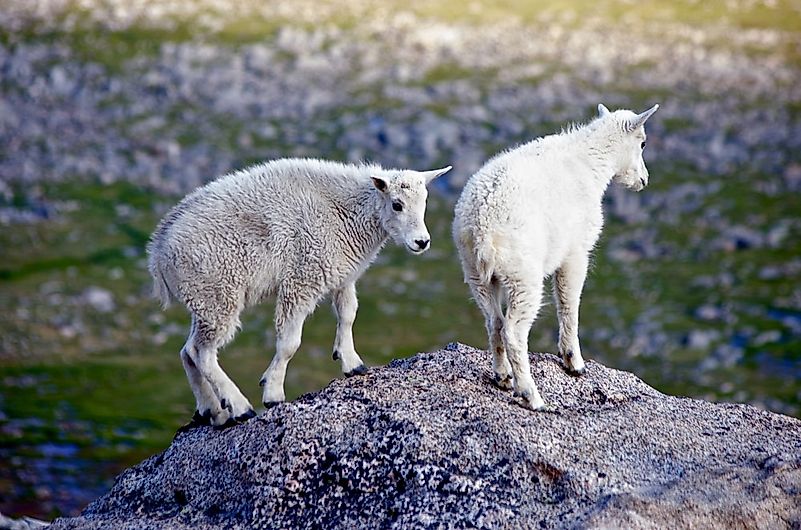
Mountain Goat

#15 Mountain Goat

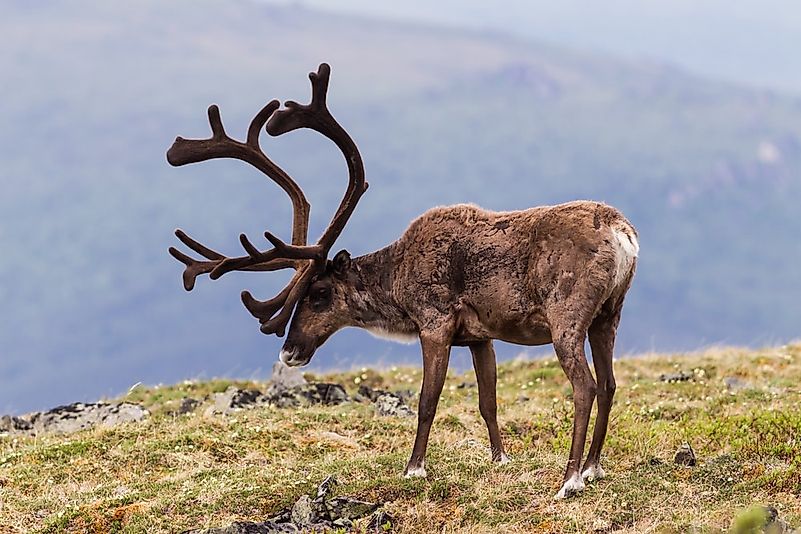
Caribou

#14 Caribou


Caribou or reindeer refers to the various subspecies of the species Rangifer tarandus. In North America, caribou is found in Alaska, northern parts of Canada including territories in Yukon, Nunavut, Northwest Territories, Canadian Rockies, Selkirk and the Columbia Mountains. Reindeer, the Eurasian name for caribou, is found in the tundra ecoregion of northern Europe and Siberia. Caribou or reindeer occur both in the wild or as semi-domesticated herds. These animals are utilized by the people of the tundra regions for their milk, meat, hide, and are also used for transportation.

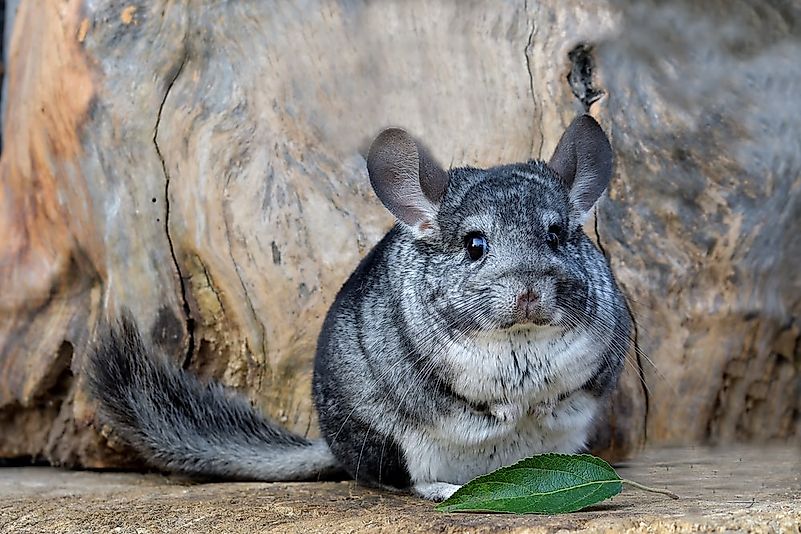
Chinchillas

#13 Chinchillas


Chinchillas are crepuscular alpine tundra animals that inhabit the Andes mountains in South America. These rodents live in large colonies at elevations as high as 14,000 feet. The number of chinchillas has reduced considerably due to the hunting of these animals for their fur. They are currently classified as critically endangered.

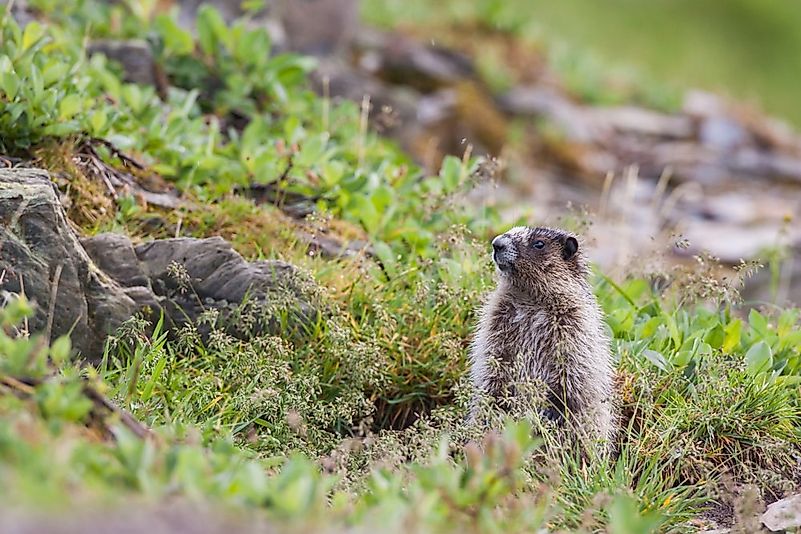
Marmot

#12 Marmot


These Alpine tundra animals are undoubtedly cute looking. Marmots are large squirrels that are found in the alpine tundra zones of mountain ranges in Europe, Asia, and North America. For example, marmots are found in the Carpathians, Apennines, and Pyrenees in Eurasia, in the Deosai Plateau of Ladakh in India, and also in the Rockies, Sierra Nevada, and other mountains of North America. These herbivorous animals are burrow dwellers and hibernate through the winter.

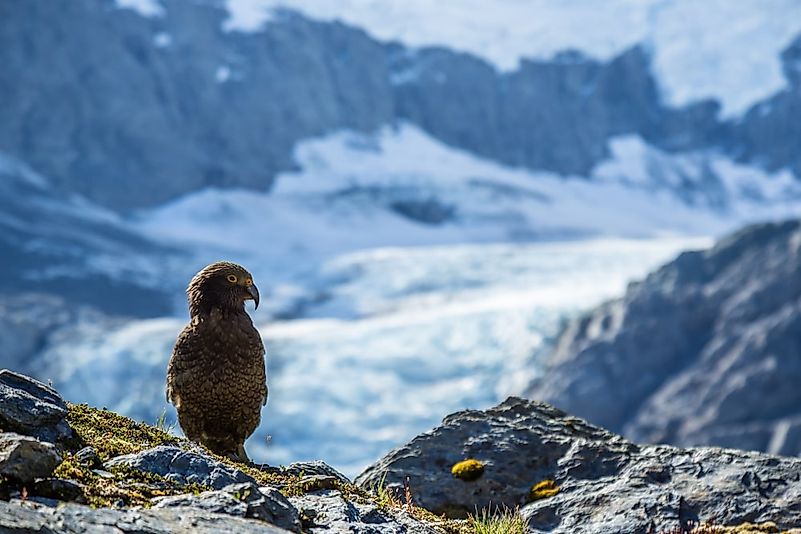
Kea

#11 Kea


The kea is the only parrot living in the alpine regions of the world. It lives in New Zealand’s South Island where it inhabits the forested and alpine regions of the island. This olive-green colored bird has bright orange under its wings and a gray upper beak that is narrow and curved. The omnivorous bird feeds primarily on carrion and is known for its curious nature and intelligent trait.

Arctic Hare

The Arctic hare (Lepus arcticus) inhabits the tundra regions of the world where it is well-adapted to the mountainous and polar habitat. Short ears and limbs, thick fur, and a small nose of the Arctic hare help to conserve body heat. Body fat makes up 20% of the body weight of the Arctic hare. They live in burrows dug be the ground, move alone or in groups, and can run at speeds of 60 km per hour.

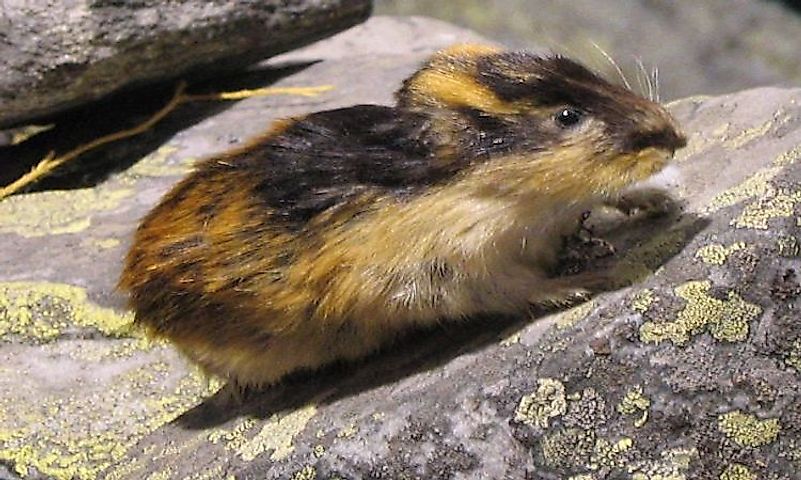
Lemming

#9 Lemming -


One of the smallest of the Arctic tundra animals, the lemming is a subniveal animal which means it lives underneath the snowpack and moves by digging tunnels beneath the snow-covered land of its habitat. Lemmings feed mostly on plant parts and occasionally insect larvae and grubs. Lemmings are solitary creatures that remain active throughout the cold season instead of hibernating.

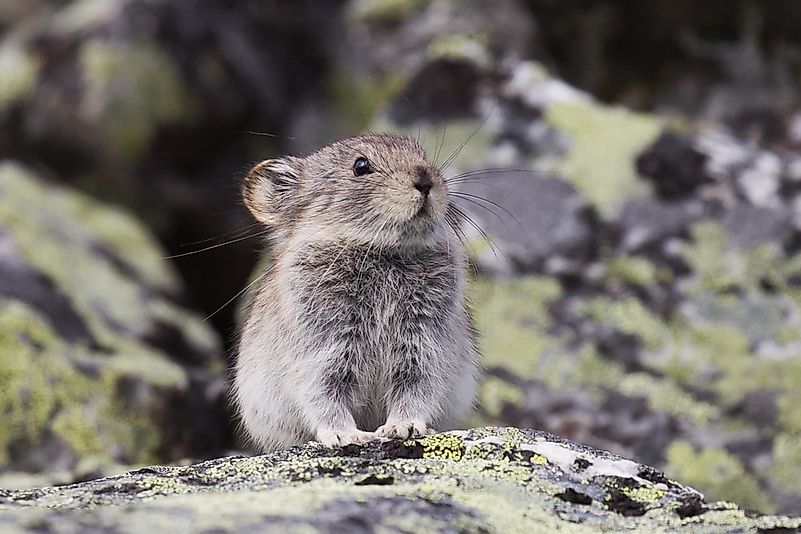
Pika

#8 Pika


The pika is a small mammal with round body, rounded ears, short limbs, and no external tail. Pikas are tundra animals living in the mountainous areas of Asia and North America at heights of over 6,000 meters. They graze on plant parts, especially grasses.

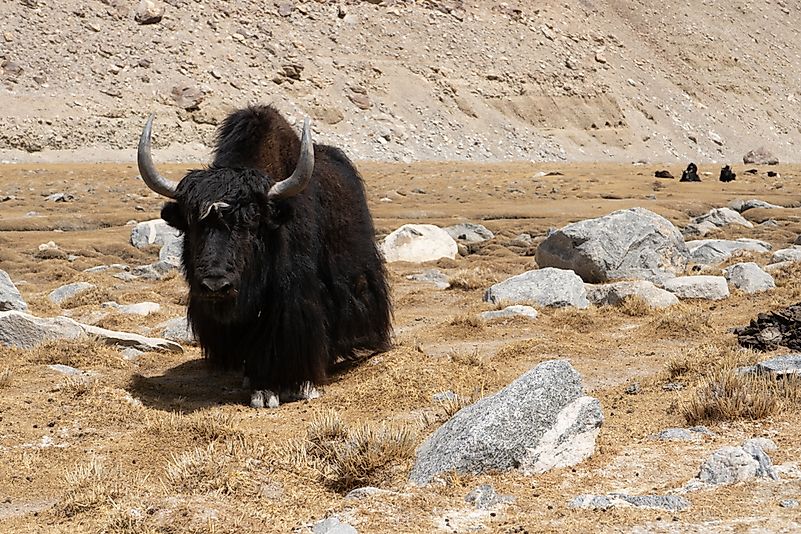
Yak

#7 Yak


The yak (Bos grunniens) is a domesticated bovid species that is found in the mountainous region of southern Central Asia, through to the Tibetan Plateau and into Mongolia and Russia. Yaks have been kept for their meat, milk, fiber, and also as beasts of burden for thousands of years. However, yaks cannot survive without grass and thus cannot be used for long distance travel with barren landscapes.

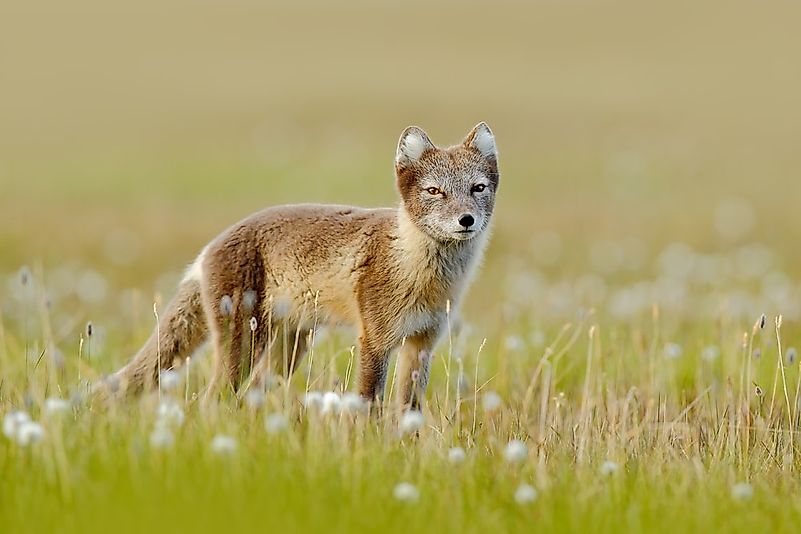
Arctic Fox

#6 Arctic Fox


The Arctic fox (Vulpes lagopus) is one of the most common Arctic tundra animals. The fox has a thick fur that turns from brown to white in winter, and a rounded body shape that helps conserve heat. It has a wide prey base that includes lemmings, voles, fish, seabirds, and more.

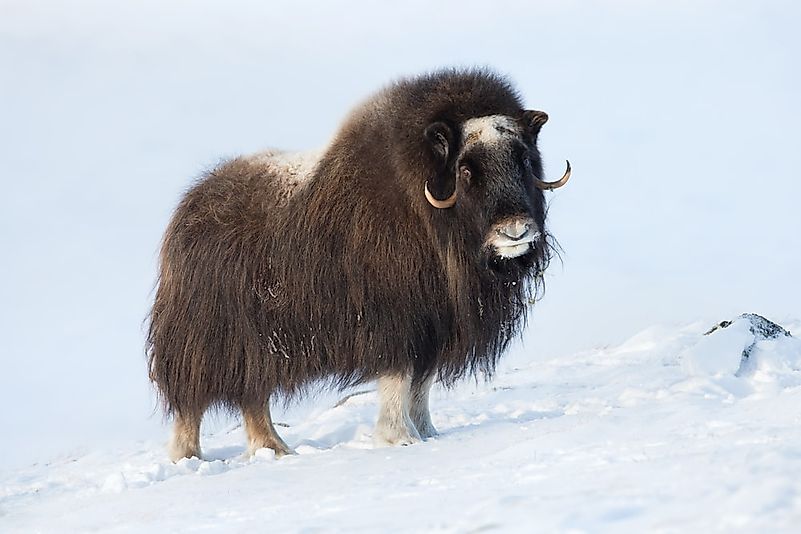
Musk Ox

#5 Musk Ox


Noted for the strong odor emitted by males of the species during the seasonal rut, the muskox (Ovibos moschatus) is also one of the tundra animals. The odor aids the males in attracting females during the mating season. Muskox also has thick coats that protect them from the cold weather of their habitat. These animals inhabit the Canadian Arctic region and also Greenland. Siberia, Norway, Sweden, and Alaska have some small introduced populations of the musk ox.

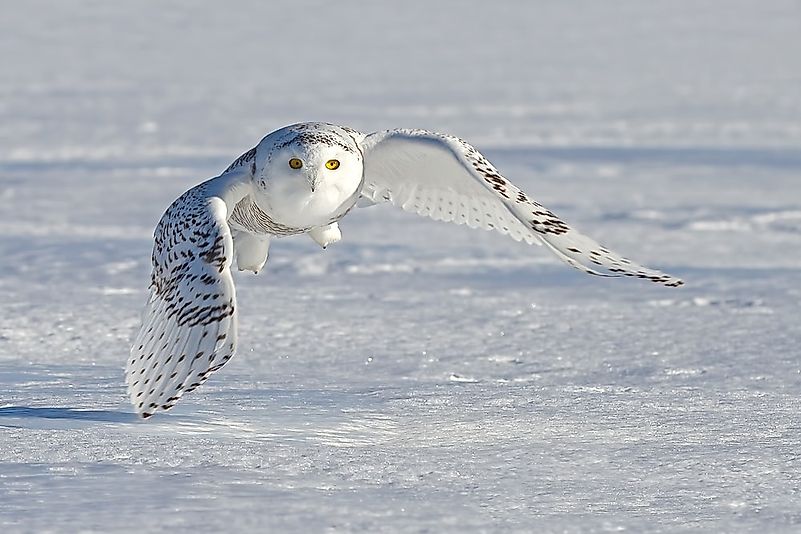
Snowy Owl

#4 Snowy Owl


The snowy owl is a big, white owl that is native to the tundra ecoregions of Eurasia and North America. The males of these birds definitely live up to their name and are nearly wholly white while females have a greater concentration of black flecks in the white plumage than males. A ground-nester by nature, the snowy owl’s predominant rodent prey matches its ecological niche.

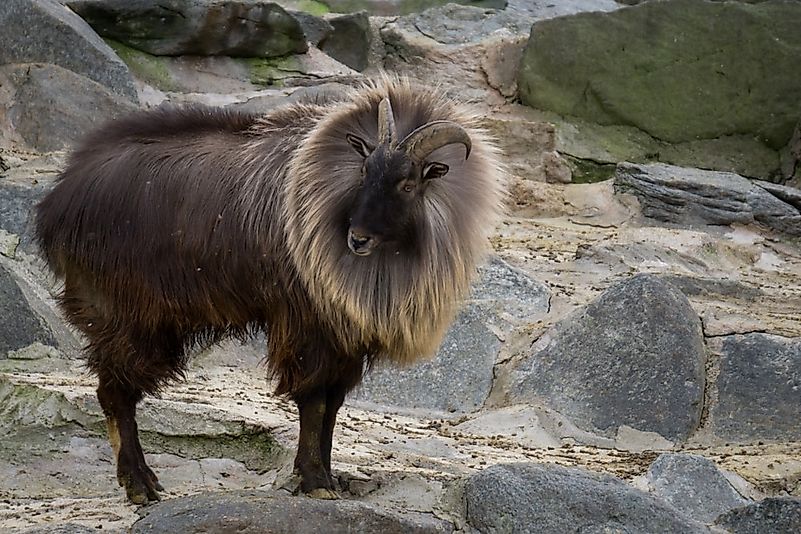
Himalayan Tahr

#3 Himalayan Tahr


The Himalayan tahr (Hemitragus jemlahicus) is a Himalayan native that can be sighted in Nepal, Tibet, and Nepal. The Himalayan tahr (Hemitragus jemlahicus) is native to the Himalayas in India, Nepal, and Tibet. Hunting and habitat loss have triggered the massive loss of these animals, and they are thus classified as Near Threatened on the IUCN Red List. The tahr is a herbivore that feeds on leaves, fruits, grasses, and other plant parts.

Antarctic Penguins

#2 Antarctic Penguins


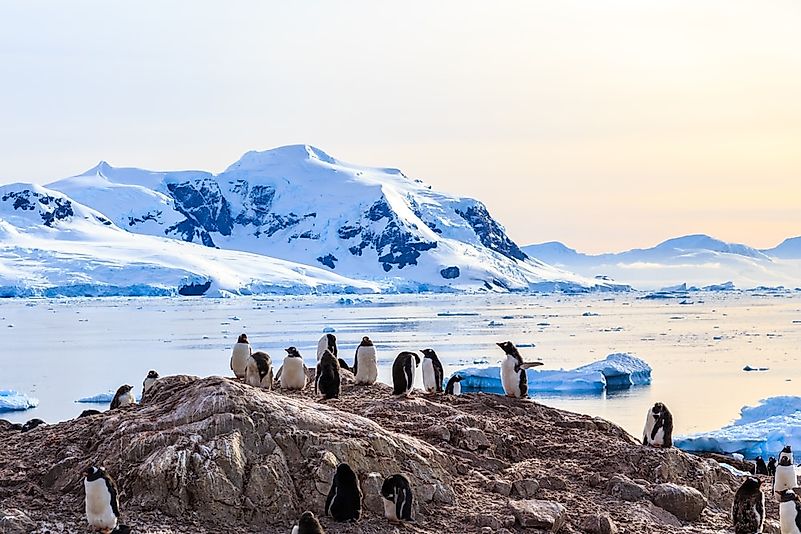
Penguins are found in the Antarctic tundra habitat where they inhabit the land and waters of coastal Antarctica. Rockhopper penguin, macaroni penguin, king penguin, gentoo penguin, emperor penguin, adelie penguin, and chinstrap penguin are the penguins of Antarctica.

Polar Bear

#1 Polar Bear


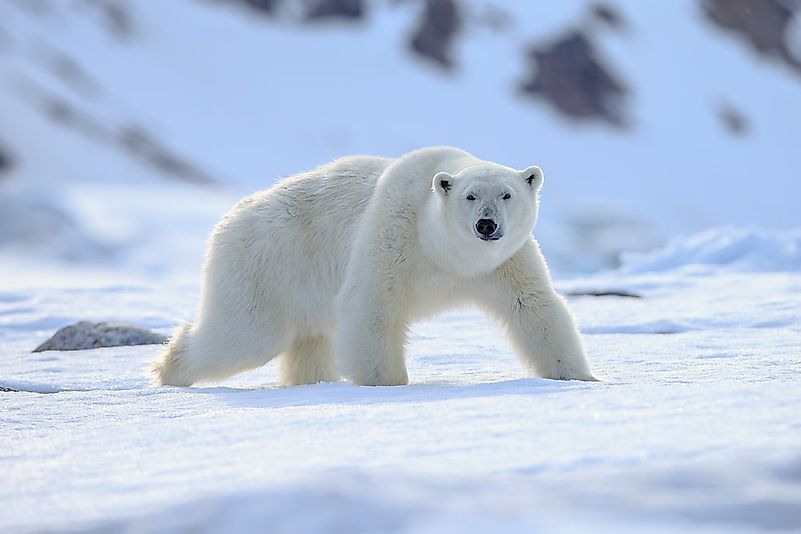
Our list of “Animals That Live In The Tundra” is definitely incomplete without mentioning the iconic species of the habitat, the polar bear (Ursus maritimus). The polar bear’s range primarily lies within the Arctic Circle including the Arctic Ocean and its surrounding areas. Polar bears are well-adapted to survive in the cold climate of their habitat. Seals form the major part of their diet. Polar bears are excellent swimmers and swim for long distances in search of food and rest.

What and Where is the Tundra?

The Arctic tundra is in the northern hemisphere, from the North Pole extending into the taiga forests. Alpine tundra can be found on mountains above the treeline with a growing season of 180 days but nighttime temperatures dip well below zero. Antarctic tundra is in the South Pole region.

The post Animals That Live in the Tundra appeared first on Gradaxis.


source https://gradaxis.com/animals-that-live-in-the-tundra/

from Dr. Linex https://ift.tt/2w2ah8q
via IFTTT
Special Adaptations Of Plants Growing In The Tundra

Special Adaptations Of Plants Growing In The Tundra

Plants growing in the tundra are specially adapted to cold and windy environments. Special adaptations of plants growing in the tundra, Plants need warmth and sunlight to grow and reproduce. In the Arctic tundra, warmth and sunlight are in short supply, even in the summer. The ground is frequently covered with snow until June, and the Sun is always low in the sky. Only plants with shallow root systems grow in the Arctic tundra because the permafrost prevents plants from sending their roots down past the active layer of soil. The active layer of soil is free from ice for only 50 to 90 days.

Arctic plants have a very short growing season. However, in spite of the severe conditions and the short growing season, there are approximately 1,700 kinds of plants that live in the Arctic tundra. Some of the plants that live in the Arctic tundra include mosses, lichens, low-growing shrubs, and grasses–but no trees. In fact, “tundra” is a Finnish words which means “treeless”.

Growing close together and low to the ground are some of the adaptations that plants use to survive. This growing pattern helps the plant resist the effects of cold temperatures and reduce the damage caused by the impact of tiny particles of ice and snow that are driven by the dry winds.

Plants also have adapted to the Arctic tundra by developing the ability to grow under a layer of snow, to carry out photosynthesis in extremely cold temperatures, and for flowering plants, to produce flowers quickly once summer begins. A small leaf structure is another physical adaptation that helps plants survive. Plants lose water through their leaf surface. By producing small leaves the plant is more able to retain the moisture it has stored.

The tundra is a treeless biome in which low temperatures and short growing seasons limit plant growth above a certain height. There are three types of tundra: Arctic tundra, Antarctic tundra, and alpine tundra. While Arctic and Antarctic tundra exist near the Earth’s northern and southern poles, respectively, alpine tundra exists in mountains, usually between the treeline and snowline. Temperatures in the tundra are well below the freezing point for most of the year, and fast, cold winds often blow over the landscape. The topsoil remains frozen most of the year, and the permafrost can be hundreds of feet thick. Although plant growth may seem imposible in such conditions, certain forms of vegetation do exist, such as sedges, grasses, mosses, lichens, and dwarf shrubs. However, these forms of vegetation have special adaptations that enable them survive in the tundra.

Tundra Plants Are Low-Growing

Low-growing plants are typical in the tundra, and most plants do not exceed 12 inches in height. Since nutrient and water availability in the tundra is low, it is difficult for plants to grow taller. Growing close to the ground also prevents plants from freezing. In addition to the lack of nutrients and water, trees are unable to grow due to the frozen soil.

Tundra Plants Tend to Grow in Clusters

Plants of the same species often grow near each other in clusters in the tundra. This adaptation helps plants conserve heat by reducing the surface area exposed to the cold, as well as protecting the plants from winds.

Tundra Plants Are Dark in Color

Dark colors absorb and retain heat better than light colors. Therefore, plants in the tundra tend to have dark-colored leaves and stems that help them absorb solar heat faster and keep warm for longer periods. Some plants are even red in color.

Some Tundra Plants Are Protected by Hair

Certain plants in the tundra have hair covering their stems and leaves. Just as fur traps air and acts as an insulator in animals, hairy outgrowths on plants keeps their temperature more moderate and prevents freezing.

Tundra Plants Have Short Growing Seasons

Plants growing in the extreme tundra climate usually have a short life cycle or a limited growing season. Most plants grow during the short summer, when the soil thaws enough for plant roots to draw sufficient water and nutrients required for growth. Some plants complete their entire life cycle within one season, while others remain dormant for the rest of the year.

Tundra Plants With Specialized Flowers

Some flowers in the tundra, such as the Arctic poppy and Arctic dryad, have dish-like flowers that can follow the sun as it moves throughout the day. These flowers absorb energy and warmth from the sun and transmit it to the rest of the plant.

Tundra Plants Have Short, Horizontal Roots

Plants growing in the tundra tend to have short roots that usually spread horizontally, as they cannot penetrate the permafrost below.

Not All Tundra Plants Need Soil 

Some types of plants, like mosses and lichens, can grow on bare rock surfaces in the absence of soil.


source https://fourteen.online/special-adaptations-of-plants-growing-in-the-tundra/

from Dr. Linex https://ift.tt/2HPlHPw
via IFTTT
Sunday, February 23, 2020

Top 10 World’s Largest Fish Species Living Today

World's Largest Fish Species

The whale shark is the largest species of fish living in the world today.

Fish vary greatly in size. The whale shark and basking shark exceed all other fish by a considerable margin in weight and length. Fish are a paraphyletic group that describes aquatic vertebrates while excluding tetrapods, and the bony fish that often represent the group are more closely related to cetaceans such as whales, than to the cartilaginous fish such as sharks and rays.

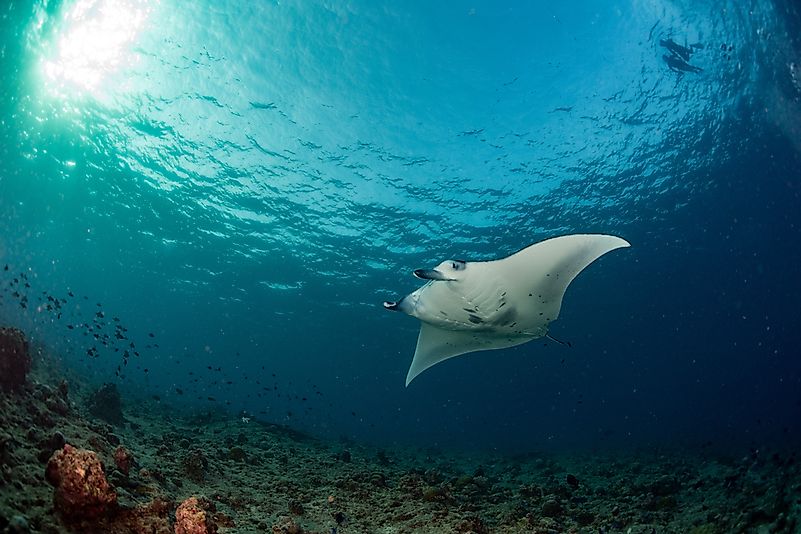
10. Reef manta ray

#10 Reef manta ray

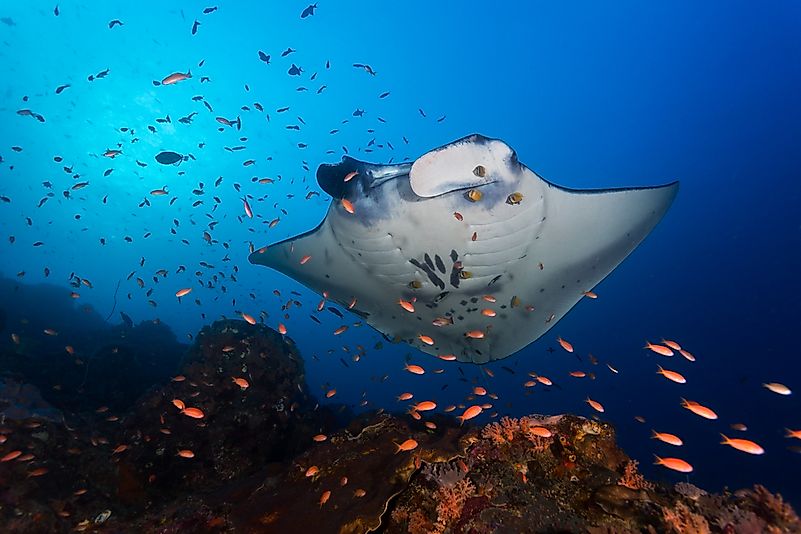
The Manta alfredi is the second biggest species of ray and the tenth biggest fish species living in the world today. The fish is generally found in the tropical and subtropical marine waters but are absent in the East Pacific and the West Atlantic. The fish can weigh as much as 1.4 tons and attain lengths of up to 5.5 m. It primarily consumes zooplankton and is a filter-feeder. Although it is rarely predated upon due to its considerable size and high speed, human activities like overfishing have adversely impacted populations of this species. The reef manta ray is thus a Vulnerable species on the IUCN Red List.

9. Beluga sturgeon

#9 Beluga sturgeon

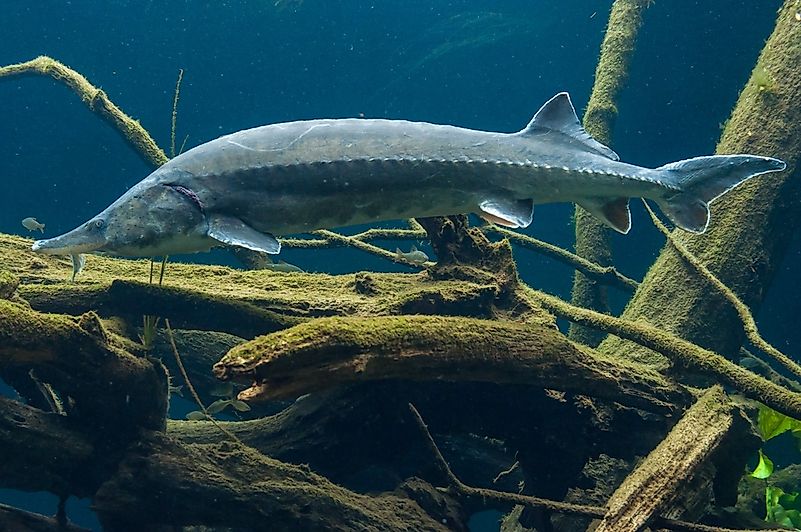
A critically endangered species, the Huso huso belongs to the sturgeon family. The habitat of the fish is restricted to the Black, Caspian and Adriatic Sea. Humans have heavily exploited this species for the beluga caviar, highly-priced delicacy. The unregulated fishing of this species and poaching activities have severely reduced the populations of this fish leading to an urgent need to protect the species from commercial exploitation. The fish is also a late maturing species with a long lifespan. It migrates upstream in rivers for laying eggs. Other fish and rarely waterfowl constitutes its prey base. The largest known specimen of the beluga sturgeon has been found to be 23.6 ft long and weigh 1,571 kg.

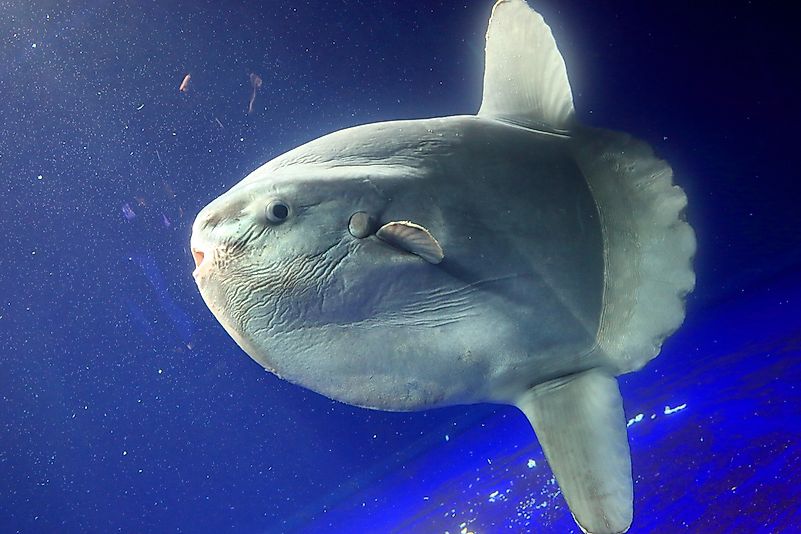
8. Hoodwinker sunfish

The Mola tecta have been recently discovered and hence little is known about its behavior. However, it is ranked as one of the biggest fish species known to us. The fish is found in the oceanic waters of the Southern Hemisphere where it preys on salps.

7. Sharptail mola

The Masturus lanceolatus is a mola species that lives in the world’s tropical and temperate marine waters. Since the species is elusive in nature, it is rarely sighted and hence little understood. The fish can attain a length of about 11 ft and weigh as much as 2 tons. The sharptail mola feeds on a wide variety of species including annelids, sponges, fishes, etc. The conservation status of the species is yet to be evaluated.

6. Ocean sunfish

#6 Ocean sunfish


The Mola mola is the world’s largest living bony fish. Adults of this species weigh around 2.3 tons and can grow up to a maximum length of 10.8 ft. Due to their unique shape, the fish can attain a height equivalent to their length. These fish inhabit the world’s tropical and temperate oceans. They feed on massive quantities of sea jelly. Although they have few natural predators, they are subjected to great threats due to human activities like fishing. Thus, the IUCN has labeled the species as “Vulnerable”.

5. Giant oceanic manta ray

#5 Giant oceanic manta ray


The Manta birostris is a ray species that ranks as the fifth largest fish species in the world. It is therefore the biggest species of ray and can be as big as 23 ft and weigh around 3 tons. These rays live in the tropical and subtropical oceans. The manta rays feed mainly on plankton and swim alone or in groups with other members of the same species or other marine species. Although the manta ray has few predators in the water, humans are responsible for a steep decline in their population due to irresponsible fishing practices.

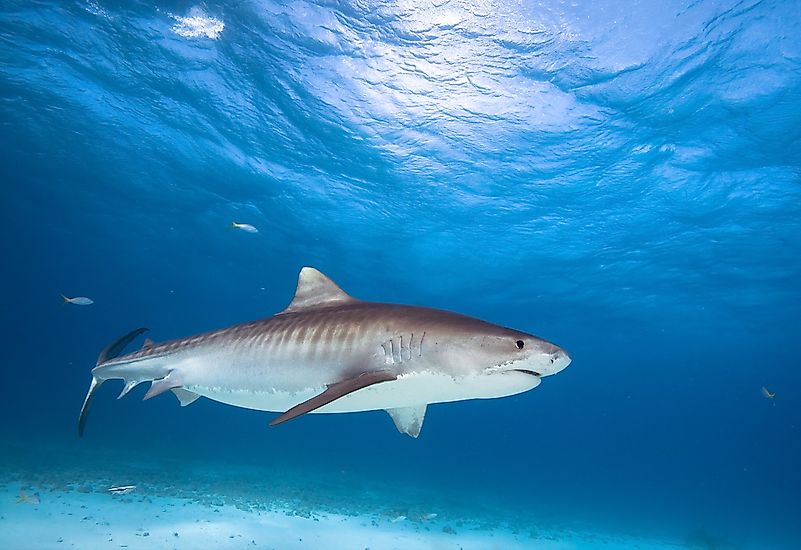
4. Tiger shark

#4 Tiger shark


The Galeocerdo cuvier or the “Sea Tiger” is the fourth largest fish species living today. It can attain a length of more than 16 ft and weigh around 3 tons. The populations of this species are widely distributed in the tropical and temperate oceans with larger populations living around the islands in the central Pacific Ocean. Younger sharks exhibit black tiger-like stripes on the body which disappear with aging. These stripes give the species its name. The shark has the widest prey base among all sharks and feeds on a range of aquatic creatures, seabirds, and even garbage. Sadly, the tiger shark is also threatened by human activities that make it a Near Threatened species on the IUCN Red List. The tiger shark is responsible for the second highest number of attacks on humans after the great white shark.

3. Great white shark

#3 Great white shark


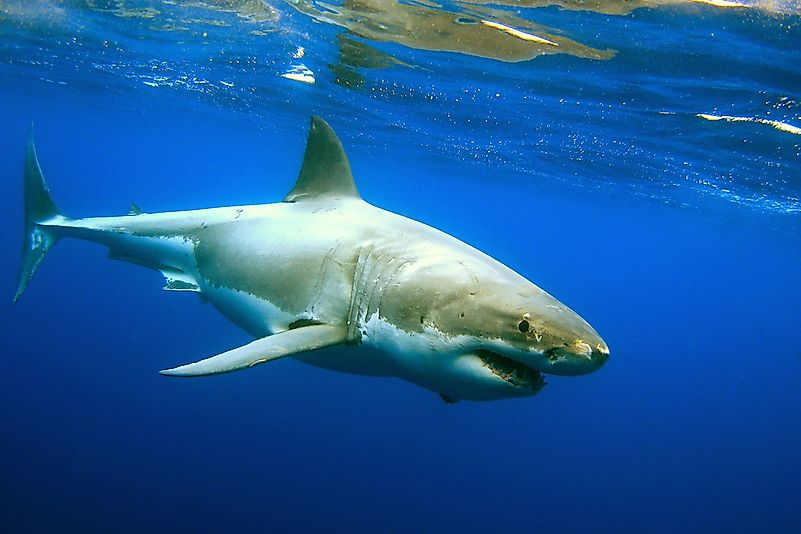
The Carcharodon carcharias is found in the coastal waters of all the oceans where water temperature ranges between 12 and 24 °C. Some specimens of the species have been found to be 20 ft long and weigh about 3.3 tons. Generally, however, individuals are about 13 ft in length. The great white shark can live for over 70 years. Most shark-related attacks on humans are associated with this shark species since it lives in coastal areas where encounters with humans are more frequent. However, humans are not the preferred prey of this species but still unprovoked attacks by the great white are quite common. These fish feed on a variety of prey species including the seabirds. The great white shark is the apex predator in its ecosystem but occasionally killer whales are known to kill these sharks. The great white shark is also a vulnerable species subjected to the same threats as the species mentioned above.

2. Basking shark

#2 Basking shark


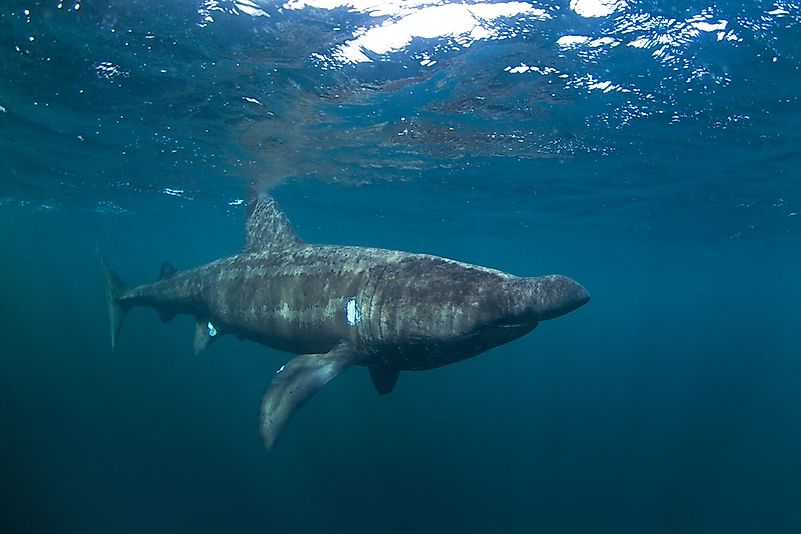
The Cetorhinus maximus can attain lengths of about 20 to 26 ft and weigh almost 19 tons, making the species the second biggest extant fish species in the world. This migratory shark species is found throughout the temperate oceans of the world. Like the whale shark, it feeds exclusively on planktons. A filter-feeder, the shark feeds near the surface of the water as if it was basking in the sun, hence the name. The basking shark has been labeled as a vulnerable species by the IUCN. Years of heavy commercial exploitation for food, shark liver oil, shark fin and also threats from fishing, bycatch losses, and more have reduced the population of the species.

1. Whale shark

#1 Whale shark


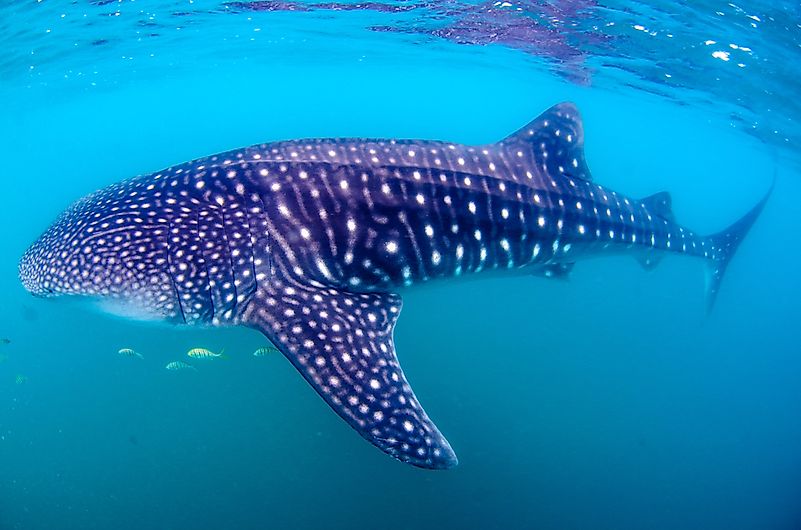
The Rhincodon typus, which can grow up to 41.5 ft and weigh as much as 21.5 tons, is the biggest fish species living today. It is also the largest extant non-mammalian vertebrate species of our planet. The whale shark is found in the warm tropical oceans’ open waters. These fish can live for up to 70 years. Despite their massive size, the fish are rarely a threat to humans. They feed mainly on plankton. The species is labeled as an endangered species by the IUCN. Bycatch losses, vessel strikes, low multiplication rate are only some of the factors threatening the future survival of the species.

What Is The World’s Largest Fish Species Living Today?

The whale shark is the largest species of fish living in the world today. The endangered whale shark can grow up to 41.5 ft and weigh as much as 21.5 tons.

Top 10 World’s Largest Fish Species Living Today

Rank Animal Known maximum mass [tonnes] Maximum length [m]
1 Whale shark 21.5 12.65
2 Basking shark 19 12.27
3 Great white shark 3.324 7
4 Tiger shark 3.11 7.4
5 Giant oceanic manta ray 3.0 5
6 Ocean sunfish 2.3 3.1
7 Sharptail mola 2 3.0
8 Hoodwinker sunfish 1.87 2.4
9 Beluga sturgeon 1.571 7.2
10 Reef manta ray 1.4 5.5


source https://fourteen.online/top-10-worlds-largest-fish-species-living-today/

from Dr. Linex https://ift.tt/2utk8E8
via IFTTT
The World’s Oldest Living Animal

The World's Oldest Living Animal

While cyanobacteria have been on earth for 2.8 billion years, jelly fish and sturgeon can also be counted amongst the world’s oldest living animal beings.

Human beings seem to be at the top of the food chain in the animal kingdom, but some creatures outlast humans in terms of longevity. Animals living on the land, in the air, and in water can last for many decades or even centuries.

Most animals people come into contact with on a daily basis, such as dogs and cats, will only live a fraction of their owners’ lives. But under the right circumstances, many animals worldwide can live for many decades or even centuries.

If the mortality rate of a species does not increase after maturity, the species does not age and is said to be biologically immortal. Many examples exist of plants and animals for which the mortality rate actually decreases with age, for all or part of the lifecycle.

If the mortality rate remains constant, the rate determines the mean lifespan. The lifespan can be long or short, though the species technically “does not age”.

Hydra species were observed for four years without any increase in mortality rate.

Other species have been observed to regress to a larval state and regrow into adults multiple times.

The hydrozoan species Turritopsis dohrnii is capable of cycling from a mature adult stage to an immature polyp stage and back again. This means no natural limit to its lifespan is known. However, no single specimen has been observed for any extended period, and estimating the age of a specimen is not possible by any known means.

At least one hydrozoan and one scyphozoan can also revert from medusa stage into polyp stage.

The larvae of skin beetles undergo a degree of “reversed development” when starved, and later grow back to the previously attained level of maturity. The cycle can be repeated many times.

Some animal species on Earth have survived the most extreme conditions through evolution and have the ability to adapt to new environments. These surviving old species have refined skills and physical traits that resemble ancient and extinct species. These animals are referred to as “living fossils.” Cyanobacteria are the world’s oldest living animal. They are approximately 2.8 billion years old. Below is a list of other living things that have existed on this planet for an astonishing long time.

10. Martialis Huereka – 120 million years old

Martialis Huereka is an ant species discovered in 2000 in Amazon rainforest. The ant is named “Ant from Mars” as they look extremely different from the rest of the ant species. Martialis huereka is considered the oldest ant species, estimated to have evolved around 120 million years ago. The ant lives in soil, measures around 0.12 inches and has no eyes. The ant has hair-like protrusions that enhance its senses. Biologists use the Martialis huereka to study other ant species in greater depth.

9. Frilled Shark – 150 million years old

Frilled shark first appeared on earth around 150 million years ago and is considered the oldest of the shark family. The frilled shark was discovered in the year 2007 in Tokyo, Japan. The animal measures 5 feet in length with over 300 teeth arranged in more than 25 rows. The animal thrives deep in the ocean as it has a huge liver having low density oils and hydrocarbons. The shark also has extra physiological adaptations. The frilled shark is rare due to over pollution and changes in ocean temperature. The female frilled shark can keep its slow-growing embryos for over three years and is considered the animal with the longest gestation period.

8. Horseshoe Shrimp – 200 million years old

The horseshoe shrimp evolved about 200 million years ago, the same time dinosaurs appeared. The horseshoe shrimp is a tiny animal and was discovered in 1955. The tiny animal can survive in any weather condition and geological alterations. The animal’s eggs can remain dormant for many years and they can hatch when right conditions are met. Researchers were able to hatch the eggs of the shrimp in a laboratory for studying.

7. Sturgeon – 200 million years old

Sturgeon, like the horseshoe shrimp, evolved 200 million years ago and is the oldest of the bony fish family. The sturgeon has 27 species that have similar characteristics. The 5-foot fish weighs about 441 pounds and is found in Eurasia and North America. The fish can live up to 100 years old. The sturgeon lays eggs in abundance, but its main threat is humans who harvest the eggs at high rates for food. These eggs are highly valued as caviar. The sturgeon is near extinction but has now been classified as a protected species.

6. Coelacanath – 360 million years old

#6 Coelacanath – 360 million years old

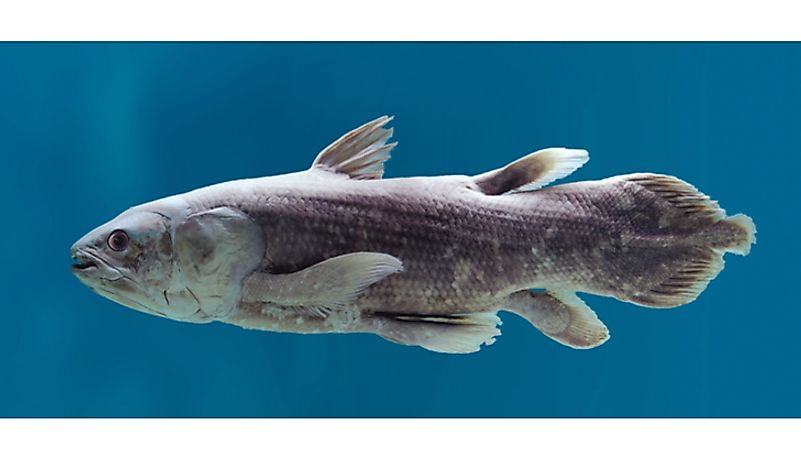
The coelacanath is a critically endangered fish living in deep waters at a depth of about 2300 feet. The fish evolved about 360 million years ago and had a lifespan of 60 years. The fish weighs about 198 pounds and measures 6.5 feet in length. Coelacanath has electrosensory organs that detect prey easily and can widen their mouth to catch large preys. The fish’s leg-like lob fins create a unique movement that makes it appear like a trotting horse. The coelacanath’s fin structure is unique in a way that it cannot be found in any other fish.

5. Horseshoe Crab – 445 million years old

#5 Horseshoe Crab – 445 million years old


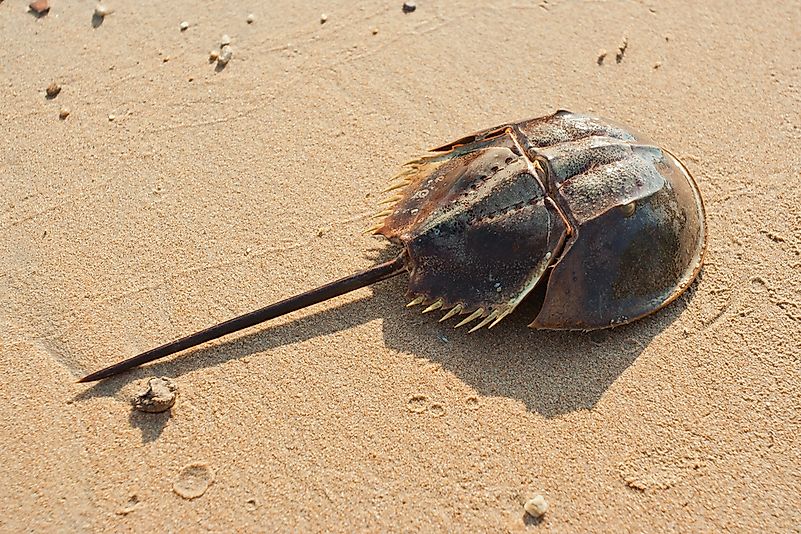
The horseshoe crab evolved around 445 million years ago and lived in shallow ocean waters. The crab has an exoskeleton, long tail, and spine. The horseshoe crab has nine eyes found throughout its body. Two of the crab’s eyes are used for sight while the rest are light receptors that manipulate movement. The horseshoe crab can sense ultraviolet rays. The crab has five pairs of legs with a claw on the tips except for the last pair. The legs are used for walking, swimming, and directing food into the mouth, which is located at the center of the legs.

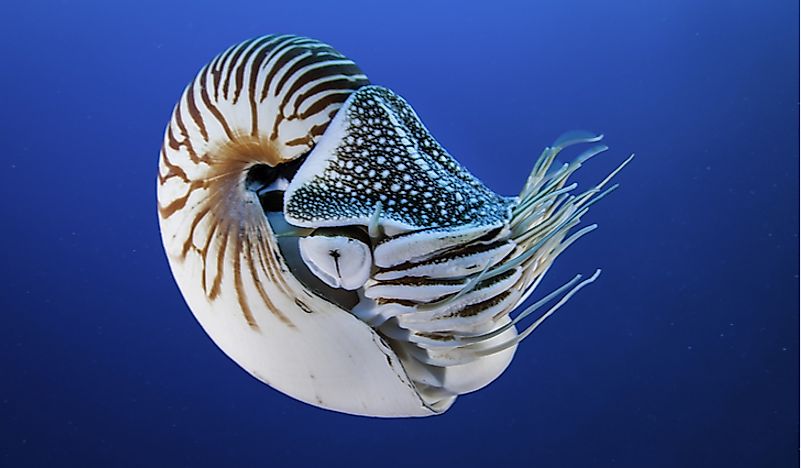
4. Nautilus – 500 million years old

#4 Nautilus – 500 million years old


The Nautilus evolved around 500 million years ago, way long before the dinosaurs appeared. It is therefore considered a living fossil. Nautilus can be found in tropical water in Andaman, Fiji, and the Great Barrier Reef, living at a depth of about 2200 feet in the ocean. The animal’s body has a many-chambered shell that makes it resemble an octopus. The animal’s mouth is ringed by 100 small tentacles used to fight predators and catch prey. The Nautilus is part of the last surviving members of the mollusks.

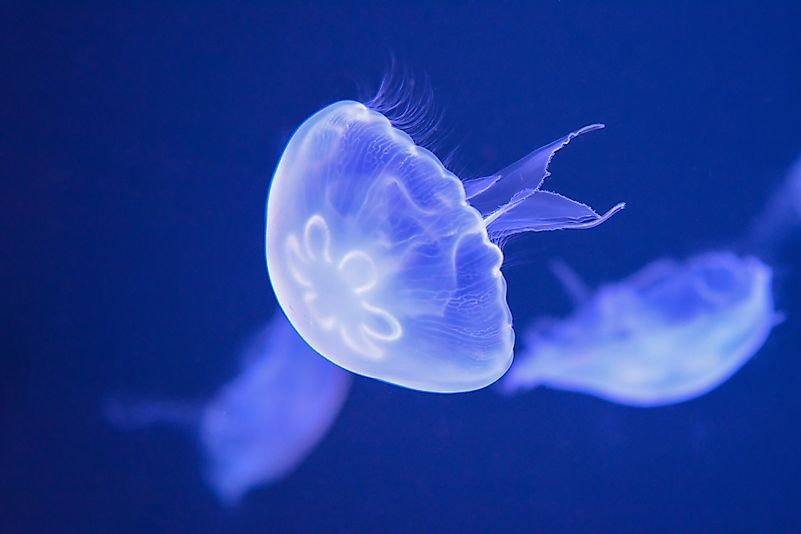
3. Jellyfish – 550 Million years old

#3 Jellyfish – 550 Million years old


The jellyfish evolved on earth about 550 million years ago and is considered the oldest multi-organ animal in the whole world. The jellyfish lacks a brain and a nervous system but only has primitive digestive and sensory organs. The animal has a transparent, jelly-like image since 90% of its body is made up of water. The animal comes in different shapes and color and can be found in all the oceans of the world. The box jellyfish, which is the most poisonous species on earth, belongs to this family of jellyfishes. The tentacles of the box jellyfish have over 5,000 stinging cells which can instantly kill a human and many large animals.

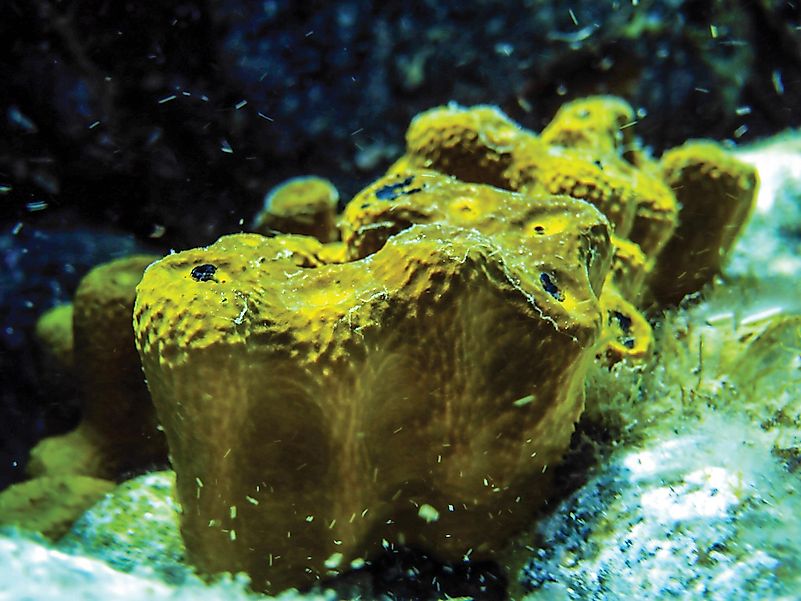
2. Sponge – 580 million years old

#2 Sponge – 580 million years old


The sponge is a primitive animal that resembles a plant. The sponge lacks internal organs and body parts and reproduces by vegetative propagation, which means, when a part breaks off, it can grow into a new sponge by latching itself onto another surface. The sponge evolved around 580 million years ago in the oceans where they live in colonies in varying depths of the ocean. It is estimated that the sponge has about 5,000 different species in the world. The sponge supports a large part of marine life to this day. The body of sponges has many canals that shelter small aquatic species.

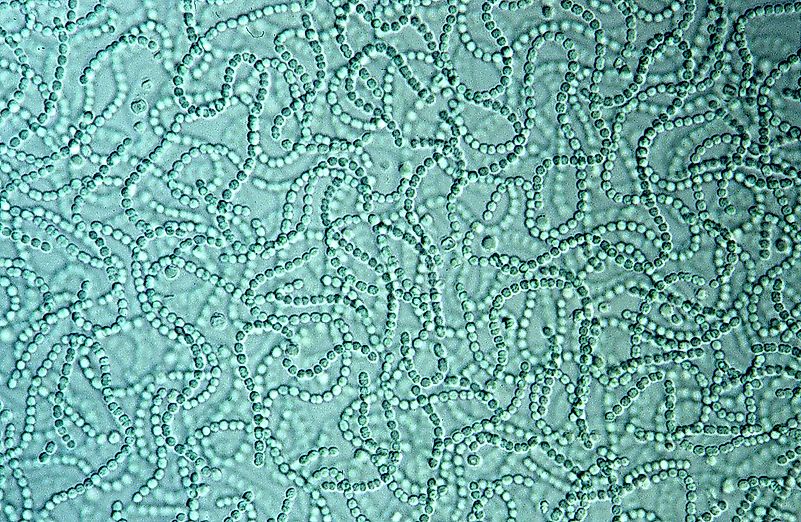
1. Cyanobacteria – 2.8 billion years old

#1 Cyanobacteria – 2.8 billion years old


Cyanobacterium is the oldest known animal species on earth having evolved about 2.8 million years ago. They are also known as green-clue bacteria. Cyanobacteria live in large colonies and produce oxygen through photosynthesis, a process through which they obtain their energy. Cyanobacteria are considered major contributors of oxygen in the world to date. These bacteria sustain all oxygen-breathing organisms. The cyanobacteria reproduce through micro fusion. The bacteria can be found all over the world in most aquatic and terrestrial habitat. Soil crusts of Cyanobacteria prevent erosion and help to retain water since they stabilize soil.

The post The World’s Oldest Living Animal appeared first on Gradaxis.


source https://gradaxis.com/the-worlds-oldest-living-animal/

from Dr. Linex https://ift.tt/3a94cWT
via IFTTT
Sunday, February 9, 2020

Reasons for Animal Population Decreases

Reasons for Animal Population Decreases

Populationis the number of individuals of a particular species in an area. Animal and plant populations depend on many things for survival. Reasons for Animal Population Decreases, Limiting factors like the availability of food, water, and shelter can impact an organism’s population. Poaching, habitat degradation, climate change, invasive species, and diseases threaten to wipe out wildlife in large numbers.

In nature, populations of animals and plants are linked together like a puzzle. The pieces of the plant and animal puzzle depend on each other to form a complete picture. If something is wrong with any of the pieces, it impacts the whole puzzle.

In the natural world, limiting factors like the availability of food, water, shelter, and space can change animal and plant populations. Other limiting factors, like competition for resources, predation, and disease also impact populations. If any of the limiting factors change, animal and plant populations also change.

Some changes may cause a population to increase. If there are more plants than usual in an area, populations of animals that eat that plant may increase. If one animal’s population increases, the population of animals that eat that animal might also increase.

Increases in population aren’t always good. Sometimes a population will grow too large for the environment to support. Other changes in limiting factors can cause a population to decrease. If a population becomes diseased, the population may decrease and the population of animals that eat the diseased animals will also decrease.

Wildlife refers to all the plant and animal species that survive in natural, wild areas throughout the world. A delicate balance must exist among all living things in order to sustain healthy ecosystems. Unfortunately, that balance has been thrown off by human involvement. Mammal, bird, reptile, fish, and amphibian populations have declined by 52% during the last 4 decades according to the World Wildlife Fund. The forces behind this unprecedented destruction are many. This article takes a look at some of the major causes of the decline in wildlife.

Major Causes of Wildlife Loss

Humans use plants and animals for nearly every facet of daily life. Food, clothing, medicine, souvenirs, pets, and building supplies are just some of the uses that have led people to rely on wildlife. Humans fulfill these needs by overfishing rivers and oceans, poaching endangered animals, and overhunting important species. Wildlife exploitation is responsible for 37% of the loss in wildlife biodiversity. We are taking more than mother nature can provide.

Human Land Use Competing for Space with Wildlife

In addition, to keep up with unsustainable human population growth, more and more land is required. Cities are expanding at alarming rates and stretching beyond their original borders. Housing developments are infringing upon plant and animal homes by covering the earth with concrete, bulldozing hills to create flat lots of land, and damming rivers and streams to produce hydro-electricity. It’s no wonder that habitat degradation and change have resulted in a 31.4% loss of wildlife. Related to this is complete habitat loss, responsible for 13.4% of wildlife loss. Habitat loss is occurring in an effort to keep up with demands for agriculture which require huge tracts of land to produce feed. This feed is used for animals that are raised for meat on factory farms. To obtain these tracts of land, deforestation practices are utilized. Deforestation tears down trees and large plants, stripping animals of shelter and food.

Pollution

All of this human development produces pollution. Waterways are polluted with runoff from manufacturing facilities, factory farms, and the gas and oil that collects on roadways. Mining practices discard unusable heavy metals and minerals into groundwater sources. Air is polluted by the fumes from traffic and burning fossil fuels. Pesticides sprayed onto crops inadvertently kills other plant species. Garbage and littering fills the land with non-biodegradable plastics that can be consumed by animals both on land and in sea. All of these reasons and more explain why pollution is directly responsible for the loss of 4% of wildlife biodiversity. But, indirectly, it is responsible for more deaths because it causes global climate change. All of those greenhouse gases released into the air not only have a direct impact on the quality of air and water but they go on to trap solar radiation which leads to increased global temperatures, natural disasters, and glacial melting. Global climate change has exterminated 7.1% of all wildlife.

Invasive Species

Human involvement does not stop with these causes. Increased globalization means that people are now traveling farther and faster than ever before taking with them new ideas, business prospects, and finished goods around the world. While this sounds like a positive advancement for civilization, it also comes with negative consequences. This increased mobility has also allowed for the spread of non-native plants and animals to move into new areas. Non-native wildlife is referred to as invasive species and they are responsible for the loss of 5.1% of all wildlife and for threatening 42% of all endangered species. Invasive species move into an area and quickly reproduce and spread. They outnumber native species, preying on them and competing with them for food resources. This decreases the biodiversity thereby changing the structure of the ecosystem.

Disease

Finally, disease among plants and animals is responsible for a 2% loss in biodiversity. Disease is almost an aftermath of the aforementioned causes of wildlife loss because it occurs in unhealthy and unbalanced ecosystems. Although they are naturally occurring, an unhealthy ecosystem cannot fend for itself and fight off virus, fungus, and bacteria in the same way a healthy ecosystem can. Lower levels of biodiversity mean that the plant and animal community is less resilient to disease.

What Can Be Done?

Within urban areas, residents need to be educated and empowered to work at a local level to promote small scale conservation efforts. Business owners need to be held accountable for the environmental degradation that their work may cause and further mandated to reduce and offset this destruction. Policy makers on an international level need to tackle wildlife trade and poaching concerns. National government should focus on converting their nations to renewable energy sources. On an individual level, people need to focus on reducing, reusing, and recycling products. This problem is large, it cannot be fixed by one person. Action is necessary across boundaries and cultures, from the lowest levels of society to the highest. The problem can no longer be ignored.

What is Causing the Decline in Animal Populations?

Some of the major factors affecting wildlife populations include human encroachment, pollution, invasive species, and disease.

Major Causes Of Decline In Wildlife Populations Worldwide

Rank Cause Of Species Loss % Of Loss Due To The Cause
1 Exploitation 37%
2 Habitat Degradation/Change 31.4%
3 Habitat Loss 13.4%
4 Climate Change 7.1%
5 Invasive Species/Genes 5.1%
6 Pollution 4%
7 Disease 2%

The post Reasons for Animal Population Decreases appeared first on Gradaxis.


source https://gradaxis.com/reasons-for-animal-population-decreases/

from Dr. Linex https://ift.tt/3bqtX6o
via IFTTT
How Palm Oil Production Is Endangering Species

How Palm Oil Production Is Endangering Species

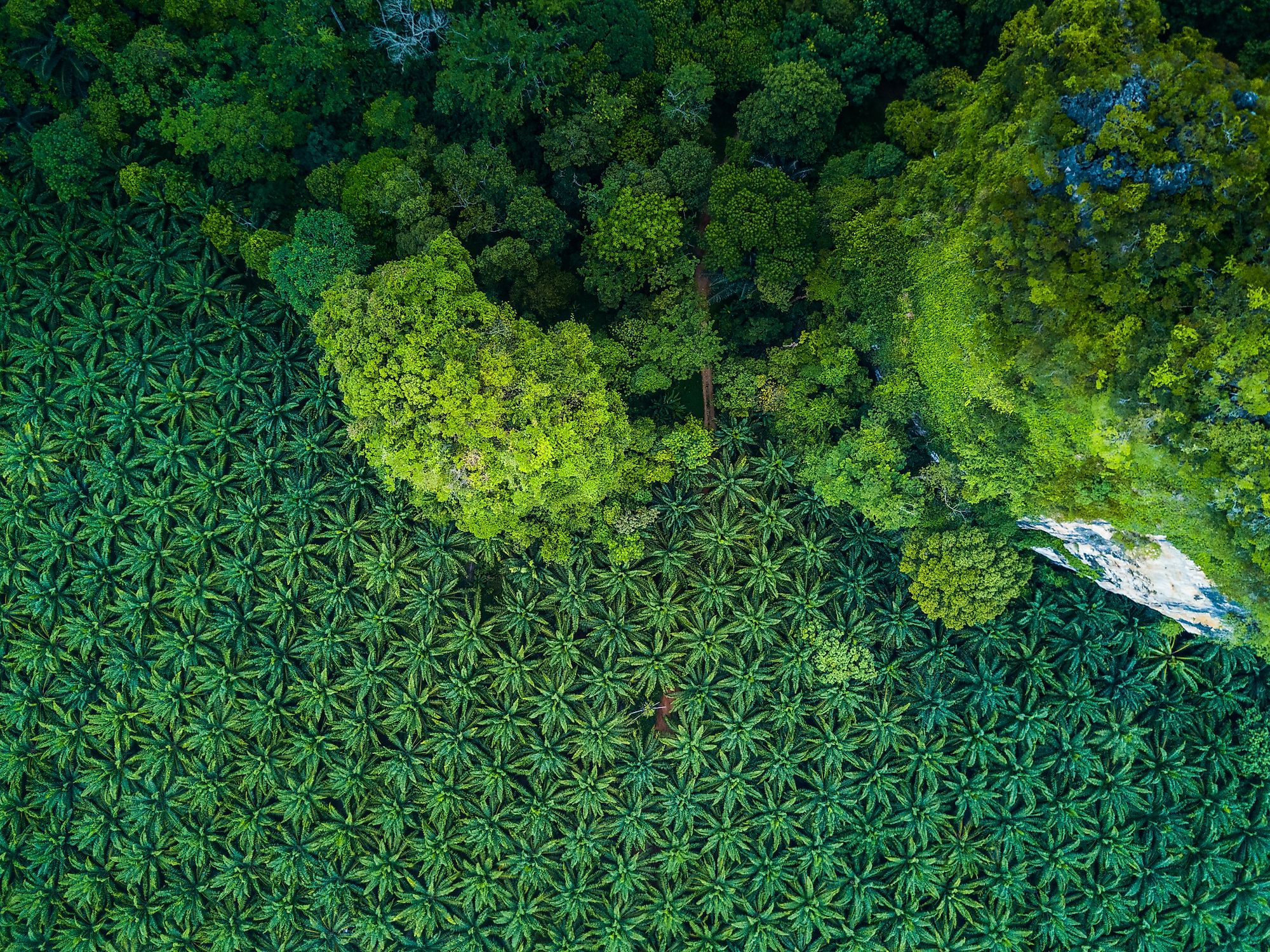
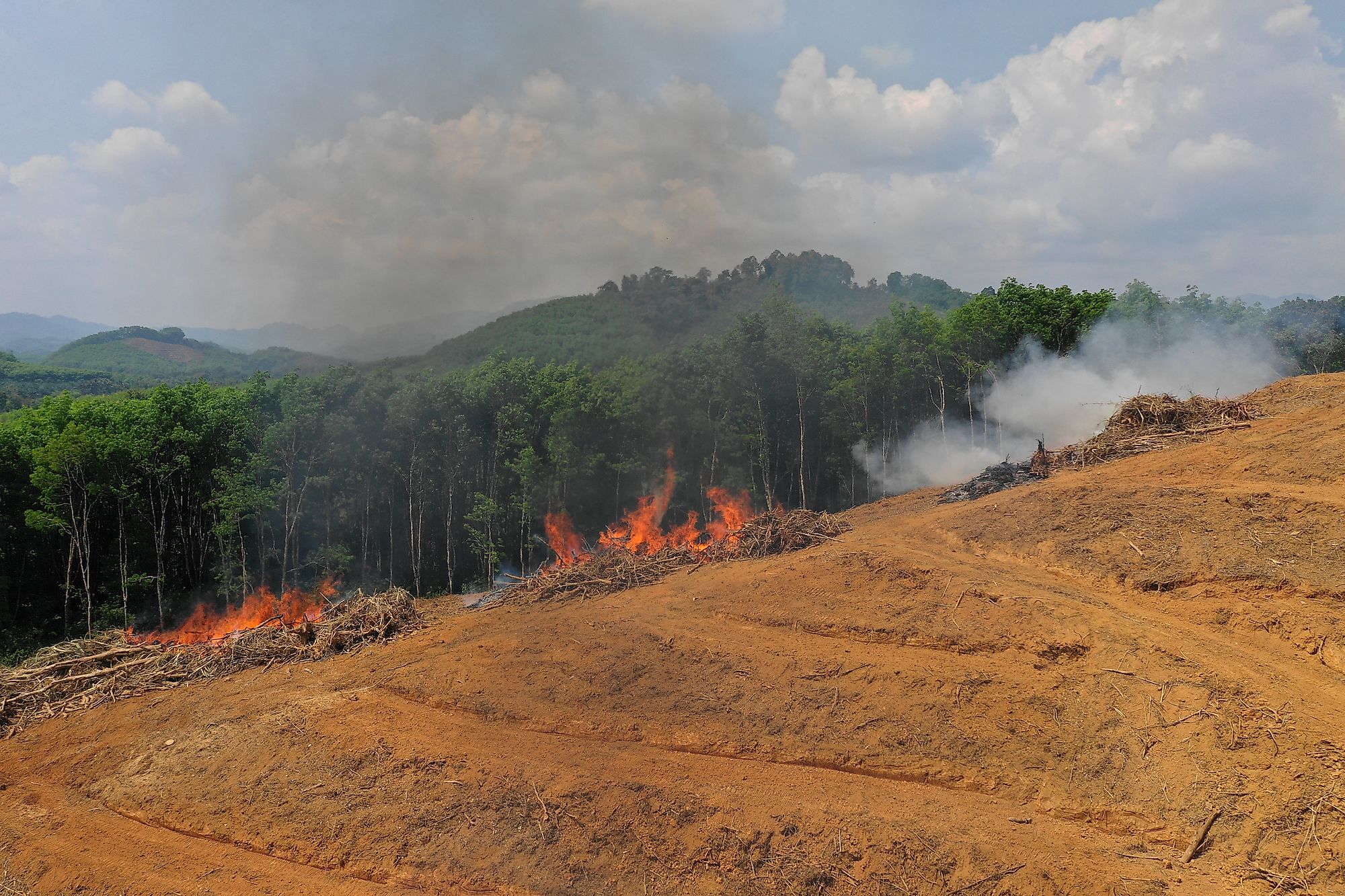
Oil palms threaten about 193 endangered, critically endangered, and vulnerable species globally. How Palm Oil Production Is Endangering Species Rainforest jungle in Borneo, Malaysia, destroyed to make way for oil palm. The International Union for the Conservation for Nature or IUCN warned about the dangers posed by palm oil production particularly on wildlife.

The international conservation group said that production of the commonly used vegetable oil has decimated the animal and plant life in Indonesia and Malaysia. It also threatens the pristine forests in South America and Africa.

IUCN said that habitat loss linked to expanding palm oil plantations pushed some of the iconic species, which include tigers, orangutans, and gibbons to the brink of extinction. Endangered species are driven into the brink of extinction as a result of their habitats being destroyed for palm oil production.

The lucrative crop was found to have harmed 193 animals and plants included in the IUCN’s Red List of endangered species.

Oil palm tree produce fruits from which oil palm is extracted. The scientific name of the tree is Elaeis guineensis. For thousands of years, people have cultivated oil palm in different settings and for various purposes. Since the rise of consumerism and processed food, palm oil has increased to become a global oil commodity. As of 2017, oil palms occupied 18.7 million hectares of industrial-scale plantations. Some view oil palms as land efficient oil crops because they occupy less land than soy and rapeseed and produce more per hectare compared to both soy and rapeseed. Oil palms produce around 35% of all vegetable oil but only sit on less than 10% of land occupied by oil crops. Today oil palm plantations can be found in different countries. Countries with the largest acreage of oil palm in the world include Indonesia, Malaysia, Nigeria, Columbia, Brazil, and Papua New Guinea.

Palm-oil Plantations Trigger Deforestation

Over the years, oil palm plantations have led to high rates of deforestation in palm oil-producing countries. The growth of the palm oil industry in Malaysia has contributed to about 47% of deforestation experienced between 1972 and 2015 in the country. In Indonesia, which is the largest producer of palm oil in the world, about 16% of deforestation was attributed directly to the production of palm oil over the same period. Similar deforestation patterns can be found on the island of Borneo, West Africa, Central, and South America. In Nigeria, one study suggested that oil palms accounted for 3% of forest loss in the early 2000s. Deforestation leads to the destruction of habitats that are crucial for the survival of many species.

Monoculture Destroys Plant Genetic Diversity

Agriculture is ranked as one of the most common threats to species listed on the IUCN Red List. An in-depth search of keywords such as “palm oil,” “oil palm,” and “palm plantation” on the IUCN Red List database reveals that the production of the crop threatens 405 species. One hundred ninety-three of the species mentioned are listed as vulnerable, endangered, or critically endangered. Some of the most severely affected species include orangutans, gibbons, and tigers. Tree and other plant species are also affected as some planted areas have over 99% less plant and tree diversity compared to natural forests. Studies have also shown a reduction in mammalian diversity of 65-90% in oil palm plantations. A majority of species groups decline in both abundance and richness. Given the monoculture nature of oil palm cultivation, it is hardly surprising that plant diversity is lost.

Invasive Traits 

There have been reports of the species escaping cultivation and naturalizing. Such incidents of invasive oil palms have been noted on several islands in Micronesia. There are also unconfirmed reports of invasive palm oil trees in Bahia, Brazil, where oil palms are threatening remnants of native coastal Atlantic forest. While the plant is not a major invasive species, it is essential to limit its spread in sensitive ecological sites.

Pest Spillover Is Highly Likely

Oil palm plantations provide favorable conditions and breeding grounds for pests that affect crops. Some of the pests commonly found in oil palm plantations include rats, Rhinoceros beetles, caterpillars, and other leaf-eating insects. Experts have raised concerns that the accumulation of such pests in oil palm plantations could lead to a spillover of damaging pests to adjacent forests. For example, a spillover of large numbers of Rhinoceros beetle could cause significant damage to leaves of native plant and tree species. Oil palm plantations also serve as breeding grounds for microorganisms such as bacteria, fungi, and viruses that cause diseases such as stem rot, a severe fungal infection that affects the oil palm truck. An outbreak of diseases could potentially affect surrounding forests.

Irresponsible Use Of Pesticides Is Bad For The Environment

Conventional agriculture utilizes a “pick and choose” technique of pesticide use, which treats the symptoms of poor land management instead of acknowledging the underlying problems. The method fails to understand agriculture as a system and its impact on wildlife. Pesticides used to control pests and diseases in plantations also cause substantial damage to insect and animal populations living around the plantations. Pesticide poisoning of wildlife may occur as a result of acute or chronic poisoning. Acute poisoning occurs due to short exposure. It can occur when animals consume vegetation that has been treated with harmful pesticides. Chronic poisoning happens for a long period when the levels of pesticides are not immediately fatal. Consumption of animals that have consumed pesticides by prey species can also lead to secondary poisoning. Pesticide use can also lead to indirect effects on the habitat and food supply. For example, insecticides reduce pollinators, which consequently affects plant pollination.

Destruction Of Forested Riparian Reserves

Freshwater fish are dependent on the water quality of streams, rivers, and lakes in which they live. The most widely used strategy to protect the quality of water in production areas is the retention of forests along rivers and streams. Forested riparian areas can reduce chemical runoff, sedimentation, and maintenance of temperature regimes in rivers and streams. In both Malaysian and Indonesia, the retention of riparian reserves is a requirement of the law. Unfortunately, non-compliance is common due to unfortunate enforcement and legal vagueness. In Indonesia, most of the large and small rivers should have a 328 and 164 feet buffer of natural vegetation, respectively. The country, however, lacks definitions of what should be considered a large river, a small river, and natural vegetation.

Fertilizer Use Creates Toxic Runoff

Fertilizers used in oil palm plantations have large quantities of phosphorus and nitrogen. When such chemicals are carried and eventually reach waterways, they can trigger the hastened progression and growth of aquatic plants. The fertilizers can promote fast growth of nuisance algae in a process known as eutrophication. Eutrophication can adversely affect water quality through increased growth of aquatic weeds and algae, which is harmful to marine life. Decomposition of dead algae at the bottom of the rivers and streams could also lead to the removal of oxygen from the water creating zones that are unsuitable for aquatic life.

Use Of Fire For Clearing

The use of fire while clearing land can lead to the extermination of plant and animal species that previously occupied the land. Continuous use of such a technique can have devastating effects on wildlife in the area.

Human-wildlife Conflict

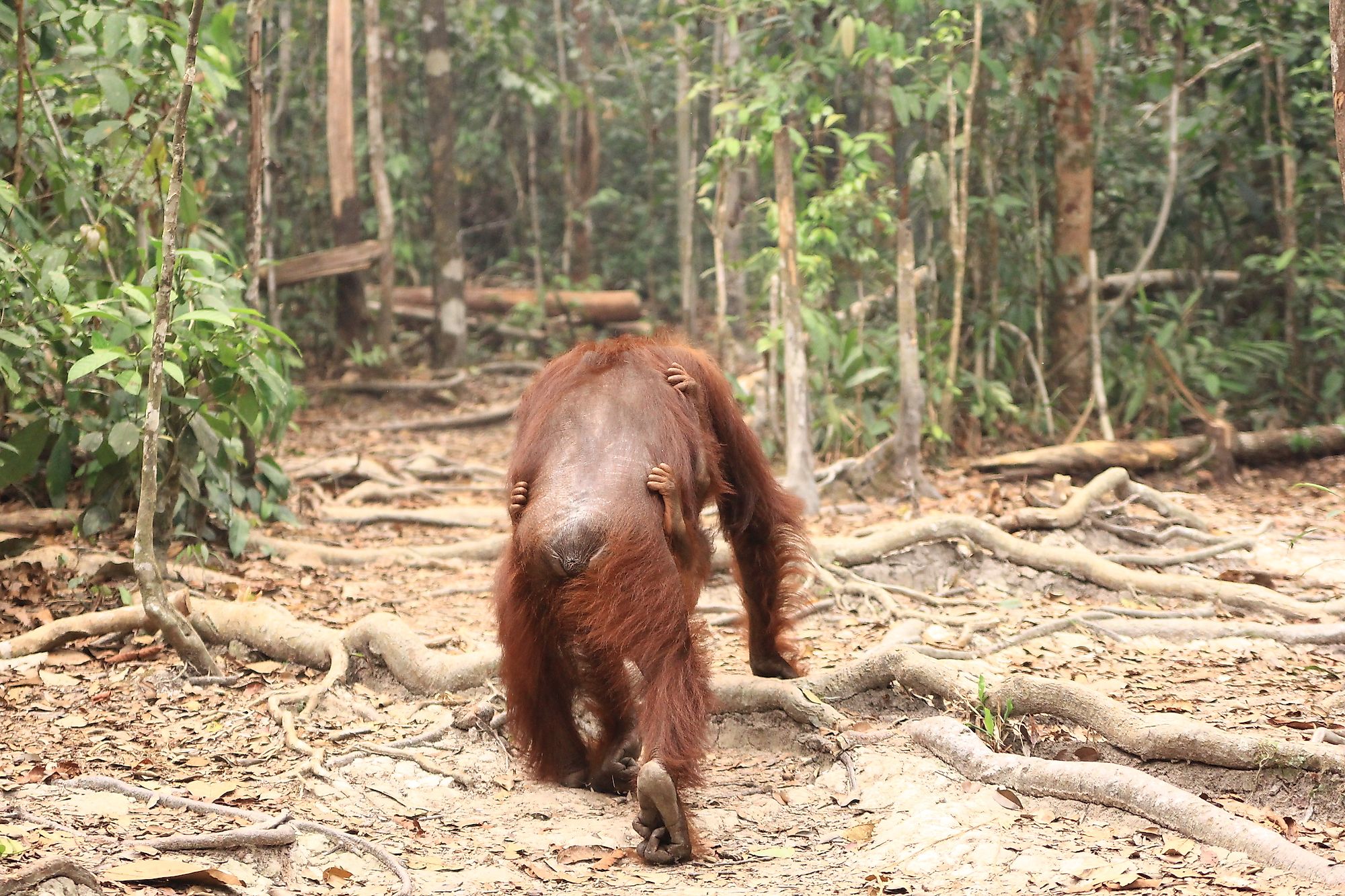
Orangutans are classified as critically endangered animals according to the IUCN Red List. Bornean orangutans have declined by about 25% over the past decade. Researchers have determined that between 1,500 and 2,500 Bornean orangutans are killed annually. Half of that number die as a result of human-wildlife conflict. Such conflicts often occur around areas where agricultural activity is expanding.

Hunting Of Wildlife Is Made Easy

Bearded pigs are an essential source of protein for a significant number of forest-dwelling people. The species has economic and cultural importance for communities living in rural areas in Sumatra, the Malay Peninsula, and Borneo, where it has been a popular source of food for thousands of years. Until recently, the bearded pig was widespread across the Malay Peninsula. During a survey conducted in 2015, direct observation showed the existence of bearded pigs in oil palm plantations. They were seen to feed opportunistically on palm fruits on the ground, an easily accessible and dependable resource. The simplified landscape has, however, meant that they are hunted with relative ease compared to natural forests. As a result, their populations have declined significantly.

Mitigating The Effects Of Oil Palm

The main strategies used in mitigation of the effects of oil palm cultivation on biodiversity revolve around addressing the loss of forests and peatlands. Some of the strategies used to protect these areas include the adoption of certification standards, regulatory policies, and corporate commitments. Conservationists utilize methods in auditing, traceability, and monitoring to realize desired conservation outcomes.

The post How Palm Oil Production Is Endangering Species appeared first on Gradaxis.


source https://gradaxis.com/how-palm-oil-production/

from Dr. Linex https://ift.tt/2w3keTj
via IFTTT